Isaac Jan Alexander Gogel Quotes
In unforeseen or exceptional circumstances, the exceptional burdens placed on the national treasury can be better served by general taxes … than though new forced loans, levies, or as yet undiscovered resources, is surely incontrovertible.
This has long been a principle of most politicians responsible for taxation and national budgets. A forced loan, was a practice where instead of taxing and industry like banks, the government requires that the loan the government a certain amount which the government pays back with interest. For the banker, this is preferable to a bank tax which he will never get back,, but then the interest has to be paid by everyone. If the benefit or its potential is to accrue to all citizens, then all the citizens should share in the burden—hence general taxes. See {639883} for a similar contemporary view.
Isaac Jan Alexander Gogel, 1765-1821, Dutch Politician, Patriot & Revolutionist, Minister of Finance, Agent for Foreign Affairs, Letter to French General Marmont, 1804
Sourced by: Eigen's Political and Historical Quotations

See {639882} for a similar contemporary view.


Although the Professor was often right about this technique, at the time he made this statement, the Clinton administration was actually cutting spending and using much of the revenue to pay for the deficit—just the opposite of what the Professor was worried about. It was successful and the deficit was eliminated and surpluses were projected. However the succeeding administration more closely followed the professor’s pattern and increased spending enormously for serious needs, but also cut taxes, so that we went during the Bush administration from the largest projected surplus in American history to the greatest deficit in American history.

Advocating canceling one year of the tax cuts for the wealthiest people to pay for the Iraq War.


This is an oratorical extension of the famous quotation of Oliver Wendell Homes Jr. See {603708}


This is the most articulate historical statement of the modern conservative mantra regarding taxes. However, one change has taken place. The words “necessarily” and “often” tend to be left out of the more modern ideological statements. Mellon’s original statement has never really had any politicians or economists who disagreed. Politicians of all economic persuasions have generally accepted the Mellon statement but the extreme conservatives’ creed is that a lowering of taxes always produces more revenue and a tax increase will inevitably lead to greater tax revenue—a position which Mellon never took. Mellon however was very solicitous of the wealthy, felt the welfare of the nation depended on their prosperity, and was a strong advocate of what was later called ‘trickle down’ economics {628592}.

See {619116}. for a related idea of his.


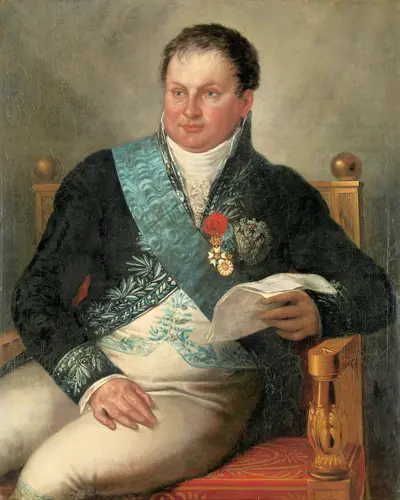
- Born: December 10, 1765
- Died: June 13, 1821
- Nationality:
- Profession:
Isaac Jan Alexander Gogel was the first minister of finance of the Batavian Republic and the Kingdom of Holland. He married Catharina van Hasselt in 1800, and had three children.
