Andrew Mellon Quotes
It seems difficult to understand that high rates of taxation do not necessarily mean high revenue for the government, and that more revenue may often be obtained with lower tax rates.
This is the most articulate historical statement of the modern conservative mantra regarding taxes. However, one change has taken place. The words “necessarily” and “often” tend to be left out of the more modern ideological statements. Mellon’s original statement has never really had any politicians or economists who disagreed. Politicians of all economic persuasions have generally accepted the Mellon statement but the extreme conservatives’ creed is that a lowering of taxes always produces more revenue and a tax increase will inevitably lead to greater tax revenue—a position which Mellon never took. Mellon however was very solicitous of the wealthy, felt the welfare of the nation depended on their prosperity, and was a strong advocate of what was later called ‘trickle down’ economics {628592}.
Andrew Mellon, 1855-1937, U. S. Treasury Secretary (Republican), Taxation: The People’s Business, 1924
Sourced by: Eigen's Political and Historical Quotations


Sherman was a member of the House Finance Committee that would have to initiate any tax bill. Most of the Republicans of that time had signed a pledge to have no new taxes and that was interpreted as no closing of tax loopholes. So they blocked all attempts at closing tax loopholes when they controlled the house or had a filibuster minority of the Senate. However in the few years that they did not, the Democrats had “more important” legislation like health care reform that they wanted to use their majority position for. The result was no closure of tax loopholes—even the egregious ones that a majority of Congress wanted closed and almost all the people did. The particular Congress when Sherman made this statement was the worst Congress in American History in terms of the few laws that the polarized Congress could pass.


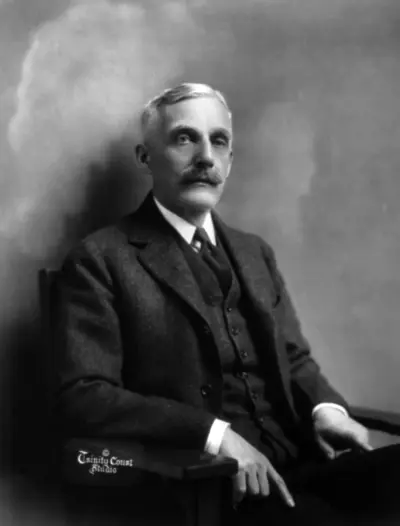
- Born: March 24, 1855
- Died: August 26, 1937
- Nationality: American
- Profession: Businessman
Andrew William Mellon, sometimes A.W., was an American banker, businessman, industrialist, philanthropist, art collector, and politician. From the wealthy Mellon family of Pittsburgh, Pennsylvania, he established a vast business empire before transitioning into politics. He served as United States Secretary of the Treasury from March 9, 1921, to February 12, 1932, presiding over the boom years of the 1920s and the Wall Street crash of 1929. A conservative Republican, Mellon favored policies that reduced taxation and the national debt in the aftermath of World War I.
