Angus Deaton Quotes
Putting, say, an 85 per cent income tax rate is unlikely to bring in much revenue.
Deaton, Angus. Interview. Financial Times, 2016.


This is the most articulate historical statement of the modern conservative mantra regarding taxes. However, one change has taken place. The words “necessarily” and “often” tend to be left out of the more modern ideological statements. Mellon’s original statement has never really had any politicians or economists who disagreed. Politicians of all economic persuasions have generally accepted the Mellon statement but the extreme conservatives’ creed is that a lowering of taxes always produces more revenue and a tax increase will inevitably lead to greater tax revenue—a position which Mellon never took. Mellon however was very solicitous of the wealthy, felt the welfare of the nation depended on their prosperity, and was a strong advocate of what was later called ‘trickle down’ economics {628592}.


The Roosevelt Administration was committed to the principle that all Americans should bear some part of the sacrifice for the war effort, not only those doing the fighting and dying. The name was in itself a bit of propaganda in that at that point in time, American victory was by no means assured.


He turned out to be very wrong as there were a number of times in American history when there were tax rates in excess of 70 percent, and they were collected.


This became known as the Buffet Principle—that the very rich should not pay a lower tax rate than the workers who make far less money than they do. President Barack Obama used this principle by name in calling for the 2011 Jobs Act which would eliminate some of the loopholes and exemptions by which the rich could avoid some or much or their tax obligation.


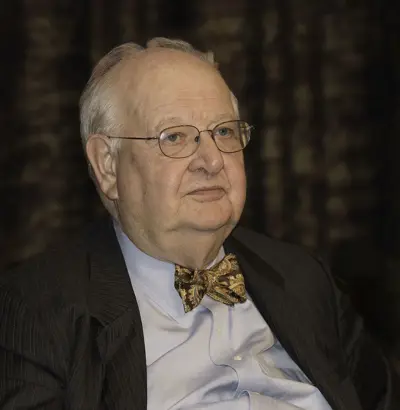
Sir Angus Stewart Deaton FBA is a British-American economist and academic. Deaton is currently a Senior Scholar and the Dwight D. Eisenhower Professor of Economics and International Affairs Emeritus at the Princeton School of Public and International Affairs and the Economics Department at Princeton University. His research focuses primarily on poverty, inequality, health, wellbeing, and economic development.
