Jean Chretien Quotes
Taken to its logical extreme, the Laffer curve makes no sense because, if you lower your taxes to zero, how are you going to get higher revenues? In practice, every government that toyed with this theory ended up with larger deficits, higher interest rates and greater social inequality.
The Laffer curve was a mathematical, economic curve supposedly showing the relationship between tax rate and government revenue from taxes. In Laffer’s version of this curve, as interest rates go down, revenue from taxes goes UP because according to Laffer, there will be much more economic activity if taxes are lowered. In reality this has happened rarely in certain countries and in a very narrow range of tax deduction. As Chretien observes if you lower the tax rate to zero according to the Laffer curve this should maximize revenue but obviously it does not because with a zero rate there are no taxes collected even if the economy is booming. The Laffer curve was ideologically popular with those politicians wanting to lower taxes, but it never stood up to serious analysis and never worked in practice as Chretien observes. As a result, some people refer to the curve as the Laughter curve.
Jean Chretien, Canadian Prime Minister, My Years As Prime Minister, 2007
Sourced by: Eigen's Political and Historical Quotations


Although the Professor was often right about this technique, at the time he made this statement, the Clinton administration was actually cutting spending and using much of the revenue to pay for the deficit—just the opposite of what the Professor was worried about. It was successful and the deficit was eliminated and surpluses were projected. However the succeeding administration more closely followed the professor’s pattern and increased spending enormously for serious needs, but also cut taxes, so that we went during the Bush administration from the largest projected surplus in American history to the greatest deficit in American history.

Kennedy, with great Republican support proposed a reduction of the top income tax rate from 91% to 65%, reduction of the bottom rate from 20% to 14%, and a reduction in the corporate tax rate from 52% to 47%. That put the tax rates at the appropriate level. Economic growth was reasonable until President Reagan’s military spending cold war strategy produced huge deficits, Clinton raised the tax rates slightly and had the best economic growth ever, and had a balanced budget. George W. Bush lowered taxes had much slower growth and even larger deficits. However, by 2013 all hints of bipartisanship were gone. The Republicans claimed that the then tax rates were much too high—the highest income tax was half the rate that most agreed in 1962 was the right rate. And the corporate tax was 35 %, far lower than the Kennedy rate of 47% and incredibly lower when we consider that with deductions that were then in force the average corporate tax was only 12% the lowest since the Great Depression. Meanwhile the 2008 Bush Economic Meltdown and the Great Recession it produced the highest deficits in history with the lowest taxes in modern times and much of the polarized population demanding further tax cuts and an equal number demanding increased tax revenue.


This is the most articulate historical statement of the modern conservative mantra regarding taxes. However, one change has taken place. The words “necessarily” and “often” tend to be left out of the more modern ideological statements. Mellon’s original statement has never really had any politicians or economists who disagreed. Politicians of all economic persuasions have generally accepted the Mellon statement but the extreme conservatives’ creed is that a lowering of taxes always produces more revenue and a tax increase will inevitably lead to greater tax revenue—a position which Mellon never took. Mellon however was very solicitous of the wealthy, felt the welfare of the nation depended on their prosperity, and was a strong advocate of what was later called ‘trickle down’ economics {628592}.


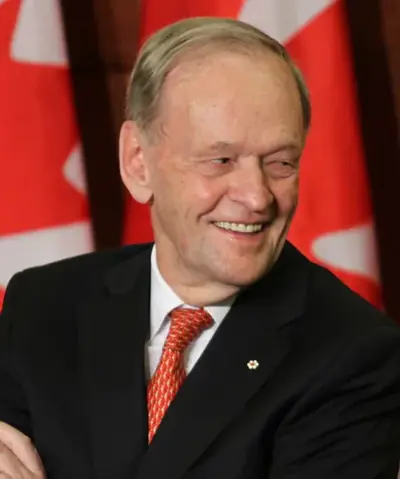
Joseph Jacques Jean Chrétien PC OM CC QC is a Canadian politician who served as the 20th prime minister of Canada from 1993 to 2003.
