George Orwell Quotes
In my opinion, nothing has contributed so much to the corruption of the original idea of socialism as the belief that Russia is a socialist country and that every act of its rulers must be excused, if not imitated. And so for the last ten years, I have been convinced that the destruction of the Soviet myth was essential if we wanted a revival of the socialist movement.
Orwell, George. "Author's Preface to the Ukrainian Edition." Animal Farm, Prometheus, 1947.


Commenting on the economic changes with the collapse of the Soviet Union and the democratic reforms that followed:

The Stalinist purges were all foretold by this bloody toast which was attended by many of the Soviet leaders.

Aleksei Maximovitch Peshkov. When some people currently refer to “class warfare” this is the kind of polemic from the left that parallels the rightist propaganda on the other side. In both cases, the worst examples of behavior of a groups is attributed to the class as a whole.

Opposition to the Bolsheviks

The one area where communists were successful was in fighting for the Russian Homeland in WWII and the subsequent assault on Germany from the East. Most American military experts did not believe that the Russians could hold out. However with American weapons and supplies they proved most effective in causing German casualties. The Russians, however, had lost 22 million soldiers and civilians—a fearful cost. But the Communists proved they could lead a nation at war, and this success bought them 50 years of acceptance from the Russian people before their inability to manage a civilian society finally became clear and the Soviet Union collapsed.

While he disagreed with Russian policies in any cases, he kept his criticism private but strove to maintain Yugoslavia as a Socialist state and part of the Soviet lock but independent. As his policies more and more deviated from Russian policies, Stalin tried to have Tito assassinated as Tito had his own independent policies on relations with the West.

This book was one of the classic studies of the last days of the Soviet Union.


The “rebate agony” referred to a corrupt practice of the Railroads and the Large Monopolies. The railroads charged a very high rate for the transportation of important products like beef and oil. However, secretly they gave back a large percentage of the transportation rate charged to the trusts. They in turn could cut their prices and undersell all the smaller competitors who were paying “full freight” and could not afford to match the lower price. As soon as the smaller competitors were driven out of business in an area, the trust raised its rates even higher than they charged originally. The Railroad had made a small but reasonable profit on the freight of the trusts but they were guaranteed all their business. They also made huge profits on the higher rates that the small companies paid until those companies were driven out of business. Journalists like Ray Baker and Ida Tarbell had uncovered the rebate scheme which enabled the trusts to steal high amounts from the general public through unreasonably high prices. President Theodore Roosevelt was committed to try and regulate the railroads and not allow rebates but charge the same public rate to all with no rebates. Socialists like Sinclair, thought that this attempt would be hopeless—that the damage had already been done, and the trusts now had so much money that they could buy state legislatures and many in Congress to preserve their dominance.


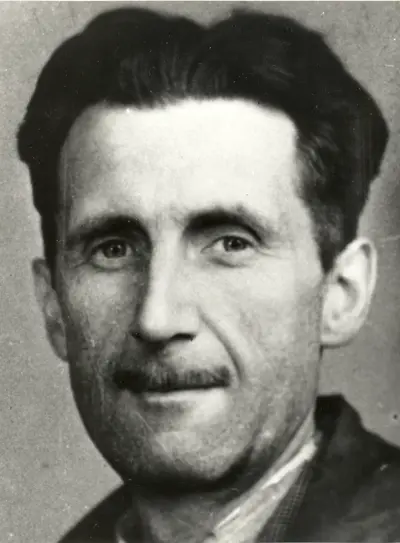
Eric Arthur Blair, known by his pen name George Orwell, was an English novelist, essayist, journalist and critic. His work is characterised by lucid prose, biting social criticism, opposition to totalitarianism, and outspoken support of democratic socialism.
