Aleksandr Solzhenitsyn Quotes
I hope that no one present will suspect me of offering my personal criticism of the Western system to present socialism as an alternative. Having experienced applied socialism in a country where the alternative has been realized, I certainly will not speak for it. The well-known Soviet mathematician Shafarevich, a member of the Soviet Academy of Science, has written a brilliant book under the title Socialism; it is a profound analysis showing that socialism of any type and shade leads to a total destruction of the human spirit and to a leveling of mankind into death.
Solzhenitsyn, Aleksandr. A World Split Apart. Harper & Row, 1978, p. 49.


Despite the fact that many Americans saw communists and socialists as of the same ilk, socialists were very suspicious of communists—especially the “party discipline” and the lack of individual freedom, while the communists saw the socialists as just another form of fascism and attacked it violently. Later, the party line against socialists softened as Cold War communist strategy solicited assistance from the socialist, unaligned nations.

Socialism in its then pure form had the state owning and controlling all the major assets of the nation. In this sense it was contradictory to individual freedom and hence democracy. However, in the years after Tocqueville’s quotation and the industrial revolution, socialism has gradually moved away from state ownership and operations of all institutions and resources. Democracy has tended to adopt a more regulatory view to control the excesses of unbridled capitalism. The range of democratic nations by the 21st century encompassed differences but some were described as “social democracies” and had some state ownership but were basically capitalistic economies. Even the self-described Communist nations had become heavily capitalistic albeit with less political freedom. At the same time, even the United States—the epitome of 21st century capitalism, owned and controlled a few of the resources and means of production and tended to regulate the others—a substantial difference from the American democracy which Tocqueville studied.

Fidel Castro polarized Cubans. Most loved him as a leader and accepted his left wing, communist policies. Many opposed him and have feared any leftward government policies and practices.


This was a very important quotation in that Sartre was a very influential liberal philosopher and when he condemned Russian communism, many other liberals opposed communism, and those who had already felt vindicated in their decision.

This was a big factor that made the Red Scare so damaging.


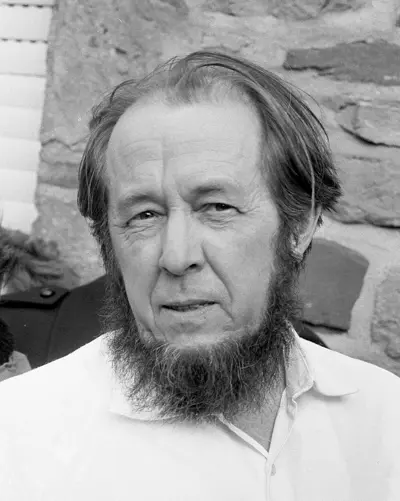
Aleksandr Isayevich Solzhenitsyn was a Russian novelist, philosopher, historian, short story writer and political prisoner. One of the most famous Soviet dissidents, Solzhenitsyn was an outspoken critic of communism and helped to raise global awareness of human rights abuses, the Gulag concentration camp system and political repression in the Soviet Union.
