Alan Charles Kors Quotes
Socialism, wherever it actually had the means to plan a society, to abolish private property and to assail economic inequality and the allocation of capital and goods by free markets, culminated in the crushing of individual, economic, religious, associational and political liberty. Its collectivization of agriculture alone led to untold suffering, scarcity and injustice. … Socialism in power produce scarcity, murderous inefficiency, arbitrary inequality, cronyism, enslavement, concentration camps, torture, terror, the destruction of civil society in ecological disaster, brutal secret police and systemic tyranny everywhere it ruled. … We must acknowledge and bear witness to those things until socialism is confronted with its lived Communist reality the greatest atrocities of all recorded human life.


Socialism in its then pure form had the state owning and controlling all the major assets of the nation. In this sense it was contradictory to individual freedom and hence democracy. However, in the years after Tocqueville’s quotation and the industrial revolution, socialism has gradually moved away from state ownership and operations of all institutions and resources. Democracy has tended to adopt a more regulatory view to control the excesses of unbridled capitalism. The range of democratic nations by the 21st century encompassed differences but some were described as “social democracies” and had some state ownership but were basically capitalistic economies. Even the self-described Communist nations had become heavily capitalistic albeit with less political freedom. At the same time, even the United States—the epitome of 21st century capitalism, owned and controlled a few of the resources and means of production and tended to regulate the others—a substantial difference from the American democracy which Tocqueville studied.


This was a very important quotation in that Sartre was a very influential liberal philosopher and when he condemned Russian communism, many other liberals opposed communism, and those who had already felt vindicated in their decision.


De Tocqueville was generally concerned about what he saw as an inherent conflict between freedom and equality. Efforts to produce equality can lead in some cases to impingements on some freedoms or rights. Unlimited free rights can produce inequality and a de facto autocracy. Even in modern times America is struggling to find a proper balance.


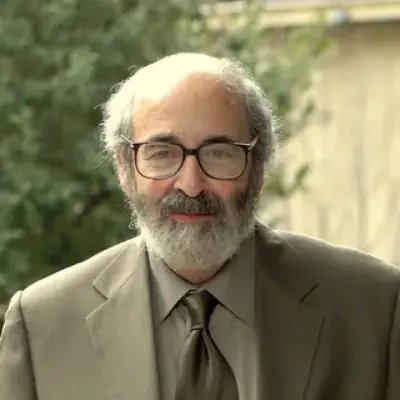
Alan Charles Kors is an American historian who is the Henry Charles Lea Professor Emeritus of History at the University of Pennsylvania, where he taught the intellectual history of the 17th and 18th centuries. He has received both the Lindback Foundation Award and the Ira Abrams Memorial Award for distinguished college teaching.
