Ryszard Kapuscinski Quotes
For Russians, a map is a kind of visual compensation, a special emotional sublimation, and also an object of unconcealed pride. It also serves to elucidate and excuse all shortcomings, mistakes, poverty and stagnation. Too big a country to be reformable! - explains an opponent of reform. Too big a country to be able to clean it up! - janitors shrug their shoulders from Brest to Vladivostok. Too big a country to be able to ship merchandise everywhere! - grumble the assistants in empty shops.
This book was one of the classic studies of the last days of the Soviet Union.
Ryszard Kapuscinski, Polish Writer & Journalist, Imperium
Sourced by: Eigen's Political and Historical Quotations


As hard as it is for us to imagine today, while her husband was President of the United States, the First Lady wrote a nationally syndicated newspaper column every single day with politics frequently the subject. While she usually agreed with the President, there were occasions where they seemed to not see things exactly the same. She tended to be more liberal than he. However, there were those who believed that when she criticized politicians, it was with FDR’s knowledge and blessing and she sometimes did his “dirty work.” Eleanor Roosevelt was one of the most influential people in the country—certainly more-so than any First Lady before and since.

It was an era in which many Russians were focusing on modernization and reform.

The “execution” to which she refers was the famous speech given to communist party leaders by Nikita Khrushchev where he publicly revealed the worst crimes of Stalin and Stalinist Russia. Prior to that, publicly Stalin was godlike in the Soviet Union. Decades of disillusionment with Stalinist Russia set the stage for the fall of the Soviet Union which was also accompanied by massive corruption, economic chaos and a diminution of the standard of living of most Russians. Some, including many of the younger people who had not lived through the Stalinist horrors, were resentful that the great era of Soviet military, scientific, and political greatness and dominance was completely overshadowed by the revelation of the purges, gulags, terror and murder. Prudnikova represents that school of thought.


Commenting on the economic changes with the collapse of the Soviet Union and the democratic reforms that followed:


RSD Party platform. The Russian Social Democratic Party was in 1887 a very modern democratic party inside the feudalism of Tsarist Russia. The Tsar and the nobility thought them wild radicals and yet their party platform was not only reasonable, but in large part influenced by the American Constitution, Bill of Rights, and then current practices in America. It is hard to believe but at the time a Russian could not work at an occupation he chose but could only do the work that was permitted by the aristocrat who owned the land he lived on. The Tsar, Alexander III, was a terrible autocrat, unlike his father who had desired some reform and abolished serfdom. All efforts at any kind of Democratic reform were put down, and Russian reformers in this party tended to split between those who still hoped for reform and those who saw violent revolution as the only hope. By 1906 the party which had no success at any of their planks of reform had split into two main subgroups—the Mensheviks and the Bolsheviks—both active revolutionary groups, but the Mensheviks tended to be more democratic and moderate and wanted to include the workers and the middle class whereas the Bolsheviks saw the middle class as part of the problem and argued for a more radical political structure. The real split occurred after the 1917 revolution when the Mensheviks lost popularity among the Russian revolutionists as not being radical or realistic enough in what it would take to transform Russia. The Bolsheviks gained control and by 1921, they had outlawed and purged the Menshevik party. That was the last hope of democracy in Russia, as the Bolsheviks model was that which guided the country until the fall of the Soviet Union.


He served as a liaison with the Russian military officers after WWII. As a result he developed friendships with some who told him much about Stalin and the Communist party of the Soviet Union.


Vladimir Lenin

Stalin was then only 26 years old. This was more than a decade BEFORE the Russian Revolution and Stalin was a young left wing revolutionary planning how to bring about a revolution and how the society should operate thereafter. He was then much the youthful, intellectual, Georgian idealist.

During the Cold War and afterwards many Americans attributed the problems we were having with the Soviet Union emenated from the fact that they were Communists, and our focus was anti-communism. Kennen, however argued that it was not Communism that was the cause of the Aggression of the Soviet Union. It was an extension of the Russian Culture. After the Soviet Union collapsed, and Communism was rejected by the Russians, we still had a great deal of Russian aggression and Foreign Policy problems with Russia. Kennan was right. It was the Russian culture, history, values and traditions that were the primary cause of most of the problems with Russia.


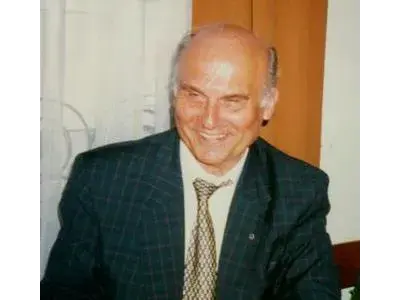
Ryszard Kapuściński was a Polish journalist, photographer, poet and author. He received many awards and was considered a candidate for the Nobel Prize for Literature. Kapuściński's personal journals in book form attracted both controversy and admiration for blurring the conventions of reportage with the allegory and magical realism of literature. He was the Communist-era Polish Press Agency's only correspondent in Africa during decolonization, and also worked in South America and Asia. Between 1956 and 1981 he reported on 27 revolutions and coups, until he was fired because of his support for the pro-democracy Solidarity movement in his native country. He was celebrated by other practitioners of the genre. The acclaimed Italian reportage-writer Tiziano Terzani, Colombian writer Gabriel García Márquez, and Chilean writer Luis Sepúlveda accorded him the title "Maestro".
