Arthur Schopenhauer Quotes
The cheapest form of pride however is national pride. For it reveals in the one thus afflicted the lack of individual qualities of which he could be proud, while he would not otherwise reach for what he shares with so many millions. He who possesses significant personal merits will rather recognize the defects of his own nation, as he has them constantly before his eyes, most clearly. But that poor blighter who has nothing in the world of which he can be proud, latches onto the last means of being proud, the nation to which he belongs to. Thus he recovers and is now in gratitude ready to defend with hands and feet all errors and follies which are its own.
Arthur Schopenhauer, 1788-1860, German Philosopher, Aphorisms on the Wisdom of Life
Sourced by: Eigen's Political and Historical Quotations


The French have for over 1000 years had a nationalistic ego that was, compared to other countries, very extreme. Highly nationalistic Frenchmen have almost always felt that the French were not proud enough of their exalted role in the history of human civilization. De Gaulle was the most extreme but Chevenement was not too far behind.

See {613385} ,{588836}, {613384}, {613381}.


Although a member of the Prime Minister’s party and Cabinet, Cooper was so outraged that he called for Chamberlain’s resignation leading to Winston Churchill becoming Prime Minister.


Most of the Slovaks did not understand it then and didn’t after the fall of the Soviet Union when they voted for the independent state of Slovakia.


He asked for a lawyer, and was laughed at. He was jailed for 30 days and he never forgot it, even when he became the most highly paid writer in American history.


Obama was the first sitting president to ever use the actual phrase. Others had talked about the concept but never used the words.

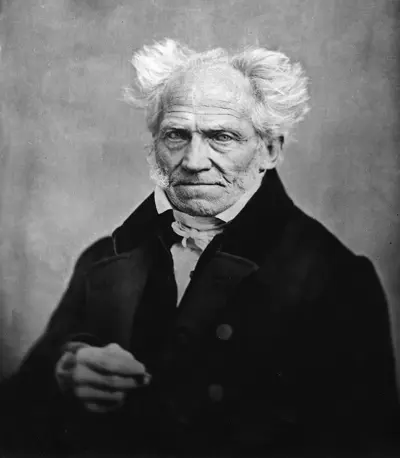
Arthur Schopenhauer was a German philosopher. He is best known for his 1818 work The World as Will and Representation (expanded in 1844), which characterizes the phenomenal world as the product of a blind and insatiable noumenal will. Building on the transcendental idealism of Immanuel Kant, Schopenhauer developed an atheistic metaphysical and ethical system that rejected the contemporaneous ideas of German idealism. He was among the first thinkers in Western philosophy to share and affirm significant tenets of Indian philosophy, such as asceticism, denial of the self, and the notion of the world-as-appearance. His work has been described as an exemplary manifestation of philosophical pessimism.
