Adam Smith Quotes
In a militia, the character of the laborer, artificer, or tradesman, predominates over that of the soldier: in a standing army, that of the soldier predominates over every other character.
Smith, Adam. An Inquiry into the Nature and Causes of the Wealth of Nations. Vol. 2, W. Strahan and T. Cadell, 1776, p. 297.


President James Madison expressed a similar sentiment in his first inaugural address.


These three conditions appear in virtually every convention on war and are basic to international law on the subject. For years they stood unquestioned, but in the latter half of the 20th century, guerilla warfare and revolutions began to pressure the definitions which were most strained in the War on Terrorism at the beginning of the 21st century. Starting with the Taliban in Afghanistan and then including Al Quada, the question of who was a combatant was debated anew. Using the classic definitions, the “foreign fighters” were not combatants and the Al Quada cells also met none of the three conditions. They could have been executed as spies as they were not in uniform according to some legal interpretations; others argued that they should be tried by civil courts; others, that they had no legal status offering any protections and it was in the discretion of their captors.


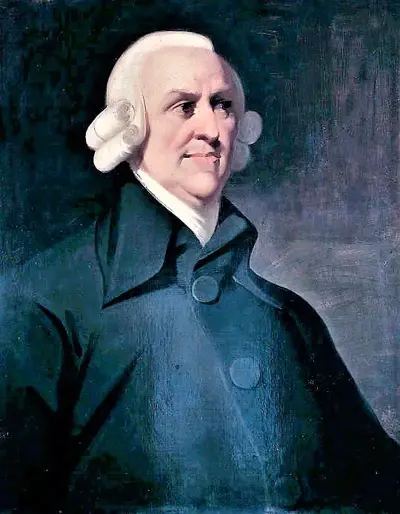
Adam Smith FRSA was a Scottish economist, philosopher as well as a moral philosopher, a pioneer of political economy, and a key figure during the Scottish Enlightenment, also known as ''The Father of Economics'' or ''The Father of Capitalism''. Smith wrote two classic works, The Theory of Moral Sentiments (1759) and An Inquiry into the Nature and Causes of the Wealth of Nations (1776). The latter, often abbreviated as The Wealth of Nations, is considered his magnum opus and the first modern work of economics. In his work, Adam Smith introduced his theory of absolute advantage.
