Mstislav Rostropovich Quotes
In 1948 the first severe crash occurred in my life when Stalin put out his decree on 'formalism.' There was a bulletin board in the Moscow Conservatory. They posted the decree, which said Shostakovich's compositions and Prokofiev's were no longer to be played.
Wilson, Elizabeth. Mstislav Rostropovich: Cellist, Teacher, Legend. Faber & Faber, 2007, p. 55.


Trotsky appeared at the Russian Foreign Ministry shortly after the October Revolution. The staff had served the Czar and the Aristocrats who were in charge of the Czar’s Ministries. To them Trotsky (and the other revolutionary leaders) were nobodies and certainly not fit to lead a Foreign Ministry. They did not quite realize that Russia and the world had changed forever.

Even leading Soviet officials were critical of the Stalin era and Stalin’s brutal, dictatorial methods.

This was a big factor that made the Red Scare so damaging.


The “execution” to which she refers was the famous speech given to communist party leaders by Nikita Khrushchev where he publicly revealed the worst crimes of Stalin and Stalinist Russia. Prior to that, publicly Stalin was godlike in the Soviet Union. Decades of disillusionment with Stalinist Russia set the stage for the fall of the Soviet Union which was also accompanied by massive corruption, economic chaos and a diminution of the standard of living of most Russians. Some, including many of the younger people who had not lived through the Stalinist horrors, were resentful that the great era of Soviet military, scientific, and political greatness and dominance was completely overshadowed by the revelation of the purges, gulags, terror and murder. Prudnikova represents that school of thought.
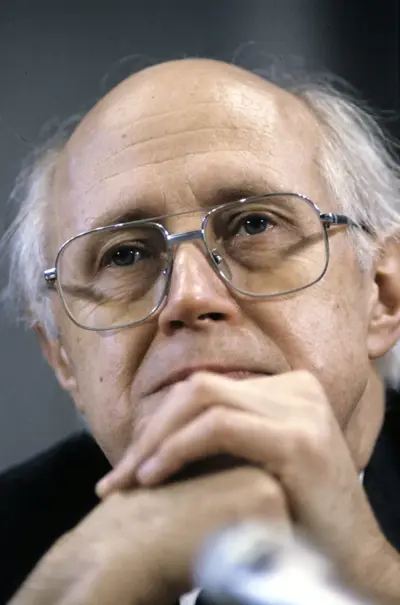
Mstislav Leopoldovich "Slava" Rostropovich was a Soviet and Russian cellist and conductor. He is considered to be one of the greatest cellists of the 20th century. In addition to his interpretations and technique, he was well known for both inspiring and commissioning new works, which enlarged the cello repertoire more than any cellist before or since. He inspired and premiered over 100 pieces, forming long-standing friendships and artistic partnerships with composers including Dmitri Shostakovich, Sergei Prokofiev, Henri Dutilleux, Witold Lutosławski, Olivier Messiaen, Luciano Berio, Krzysztof Penderecki, Alfred Schnittke, Norbert Moret, Andreas Makris, Leonard Bernstein, Aram Khachaturian and Benjamin Britten.
