Louis Fischer Quotes
What is the secret of Stalin's unquestioned strength? He controls every wheel and screw of the party machine, which is the source of authority and power in the Soviet Union.
Fischer, Louis. Machines and Men in Russia. Harrison Smith, 1932.


This was a big factor that made the Red Scare so damaging.

On a much smaller and less damaging scale, there were some government American officials tried to intimidate, censor and if thosoe failed, ruin and discredit scientiosts who did not agree with their view of the dangers of nuclear weapons and the various policy options. Although they drove Oppenheimer and some other scientists out of government and to this day have produced scientists who will not work on government research, the laws, Constitution and checks and galances and cmittment to the Constitution be most Americcans limited the damage somewhat and unlike Russia who assassianted scientists who did not follow the Party line, the few American officials just asassinated their character and patriotism.

After the breakup of the Soviet Union, NATO expanded to include some fo the former Soviet Nations thus moving NATO territiry to the East--closer to Russia, whose leaders percieved that the expansion was hostile and dangerous for the indpendence of Russia. What made the situation more complex is that the American Secretary of State, when the Soviet Union was very powerful, had made an agreement with the Soviets that in return for Russian aquiessance of NATO being extended to East Germany, NATO would not expand further West. But after the collapse of the Soviet Union, Russia was quite weak and NATO expanded east despite the earleir comittment. The US and th eother NATO counties took the pozition the previous comitmnts were not binidng as they were never formally signed. The Russians then decided to take a hard line position and flaunt and use military force to which would stop the Western expansion closer to the Russian border.

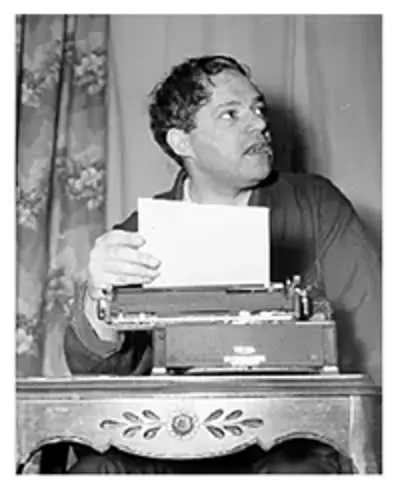
Louis Fischer was an American journalist. Among his works were a contribution to the ex-Communist treatise The God that Failed (1949), a Life of Mahatma Gandhi (1950), basis for the Academy Award-winning film Gandhi (1982), as well as a Life of Lenin, which won the 1965 National Book Award in History and Biography.
