Stephen Ambrose Quotes
In 1945, there were more people killed, more buildings destroyed, more high explosives set off, more fires burning than before or since.
Ambrose, Stephen E. To America: Personal Reflections of an Historian. Simon & Schuster, 2002.

On March 9-10, 1945, over three hundred B-29 Superfortresses, loaded with 2,000 tons of incendiary bombs flew over Tokyo bombing the city in waves for 6 hours. Over 250,000 buildings were destroyed and more people killed than would be in either Hiroshima or Nagasaki which were destroyed by atomic bombs. The fact that the Japanese would not surrender even after such complete destruction of their capital and largest industrial city, was used by American leaders in assessing whether to use the atomic bomb afterwards. There were many who believed that the atomic bomb would not be enough for motivate a Japanese surrender as Japanese culture prohibited surrender. Indeed, even after the 1st atomoc bomb, the Japanese did not surrender, and after the 2nd, the war council was split 3-3 and the Emperor historically broke the tie. Even the atomic bomb might not have worked. Later generations found this resistance to surrender hard to understand but Japanese culture was amazingly strong then.

One of the predictions of the oncoming war with Germany.


The general was replacing George S. Patton as commander of the Third Army. Patton had opposed the deNazification policy of the allies and caused a great deal of public relations difficulty for the army command and the administration, as reporters would frequently print his views. Truscott was one of Patton’s loyal assistants. The minute he took over, the press wanted to find out if his views were the same as his former boss regarding the Nazis. They were quite different. Reporters had no story.

1st Earl Lloyd-George of Dwyfor. For the earliest use of the phrase, see {41309}.

Some scholars look back at the allied bombing of German Cities in WWII with criticism that it was morally improper to bomb populated cities, and that the use of the adjective “exterminating” indicated that Churchill was more interested in killing Germans than strategic victory. This revisionist history has two failings. First, the Germans had already bombed Coventry, London and other civilian targets in England as well as cities in Holland, Poland and other countries killing many civilians. As a result, under the rules of war, Germany was no longer entitled to protection for their cities. Further, Hamburg and other targets were manufacturing sites of war material and as such lost the protection anyway. Even Dresden, which had very little war manufacturing was the main location for R&R of German Officers and by their military presence in the city converted it into a legitimate target. FDR agreed with Churchill, that the bombing was a good strategy to cause Hitler to fall as they thought the public would rebel. They were wrong however and his grip on the population through the Gestapo and the military was so strong that, it took a land invasion and occupation to put an end to Hitler. However, the devastating bombing all but crippled the German weapons development and deployment. For example. The Germans had developed the Jet Airplane Engine and actually put a few in the fight at the end if the war. Without the bombing, they would have had many more and countered the allied air supremacy. However, it is also true that Churchill and many Englishmen and some Americans believed that the English were morally entitled to retaliation for the innocent civilians killed with the German bombing of civilian targets.

The only soldier ever so honored. See {604732} for Japanese attitude toward surrender.


Note that he assumes that not only will there be another World War, but he assumes that we will be on opposite sides.

After the sneak attack on Pearl Harbor, Stimson drafted the Declaration of War that President Roosevelt would ask Congress to vote for. However, there was a small but very vocal group of extreme Republican conservatives who opposed assisting England against Hitler and saw German and Italian Fascism as positive forces. They would oppose any administration declaration of war against Germany and Italy who had not yet attacked any American facilities. The President realized that German and Italy had a Mutual Defense Treaty with Japan, and when we declared war against Japan, would have to ally with Japan or reneg on their treaty. So FDR removed Germany and Italy from the Declaration and Congress just declared war against Germany. In the next days, Germany and Italy declared war against the United States, and the de facto situation was as Stimson had drafted it, but FDR had not given the right wing American Fascist sympathizers any issue to criticize the administration.

The military security people were so used to ferreting out communists in the 1930s that they had a hard time adjusting to the fact that the security risks or people who might have German connections or backgrounds. Many immigrant scientists were recruited for work on the Manhattan project to build the atomic bomb and they only did security clearances. The military security people kept checking on any communist background they might have had as opposed to possible connections with fascist organizations. By the end of the war they had adjusted but then had to go back to looking for communists as the Cold War evolved.
At first reading, this is just a common report of a German war correspondent riding along on a bombing mission. However what makes it a very important historical quotation is the description of the fires and the date. In WWII the allies firebombed Hamburg {624722} and Dresden, and were then accused by the Germans—and by some historical revisionists in the 21st century—of bombing civilian cities and using the firbombing technique where one huge conflagrant sucked the air out of the area and roasted even people in bomb shelters. However, it was clear that the Germans had started the bombing of civilian cities, but the firebombing was less clear. This quotation proves that it was the Germans who first broke the rules of war and that made the subsequent Allied use of the technique legal and for most people then moral.


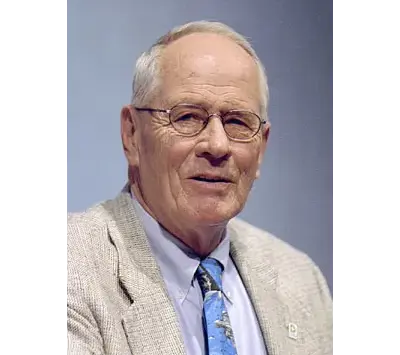
Stephen Edward Ambrose was an American historian and biographer of U.S. Presidents Dwight D. Eisenhower and Richard Nixon. He was a longtime professor of history at the University of New Orleans and the author of many bestselling volumes of American popular history.
