Bonner F. Fellers Quotes
The fire bombing of the cities of Japan have been one of the most ruthless and barbaric killings of non-combatants in all history.
Bonner F. Fellers, *, Army General, Head of Psychological Warfare, Assistant to Pacific Military Commander, Douglas MacArthur, Quoted in Dower, War Without Mercy
Sourced by: Eigen's Political and Historical Quotations

On March 9-10, 1945, over three hundred B-29 Superfortresses loaded with 2,000 tons of incendiary bombs flew over Tokyo bombing the city in waves for 6 hours. Over 250,000 buildings were destroyed and more people were killed than would be in either Hiroshima or Nagasaki which were destroyed by atomic bombs. See {615730} and {615733}. The technique called area bombing was then implemented on Japanese cities 66 more times. Stimson was seriously worried that there would be no large targets in Japan left on which the dramatic effect of the atomic bomb could be demonstrated. And without such a demonstration, there would not be a likely Japanese surrender as all the devastating conventional bombing had not persuaded the Japanese. A land invasion with perhaps millions of casualties might be required.


This quotation has been used by many criticizing the policy of massive bombing of Japanese Cities towards the end of the war. At first it appears that there was a racist disregard for Japanese Civilian lives. However there was legal logic. The Japanese had already bombed cities throughout Asia and did not adhere to the rules of war. The Japanese government “invited” all Japanese to join the military to defend the homeland to the death in the coming invasion. All adult civilians were mobilized. There were no adult civilians left in Japan. Perhaps more important was the industrial organization of Japan which exists in large part to this day. There were tens of thousands of small & tiny factories distributed throughout all the Japanese cities. These were distributed in civilian areas & in many cases were actually in homes to take advantage of available labor and not have to transport people. There was no way to bomb the munitions factories without bombing civilian neighborhoods.

On March 9-10, 1945, over three hundred B-29 Superfortresses, loaded with 2,000 tons of incendiary bombs flew over Tokyo bombing the city in waves for 6 hours. Over 250,000 buildings were destroyed and more people killed than would be in either Hiroshima or Nagasaki which were destroyed by atomic bombs. The fact that the Japanese would not surrender even after such complete destruction of their capital and largest industrial city, was used by American leaders in assessing whether to use the atomic bomb afterwards. There were many who believed that the atomic bomb would not be enough for motivate a Japanese surrender as Japanese culture prohibited surrender. Indeed, even after the 1st atomoc bomb, the Japanese did not surrender, and after the 2nd, the war council was split 3-3 and the Emperor historically broke the tie. Even the atomic bomb might not have worked. Later generations found this resistance to surrender hard to understand but Japanese culture was amazingly strong then.


This may have been one of the most indelicate and insensitive true public statements ever made by a politician. The English population and their political representatives were angry and worried very much that bombing of cities might become a German pattern (which it did.)


Some scholars look back at the allied bombing of German Cities in WWII with criticism that it was morally improper to bomb populated cities, and that the use of the adjective “exterminating” indicated that Churchill was more interested in killing Germans than strategic victory. This revisionist history has two failings. First, the Germans had already bombed Coventry, London and other civilian targets in England as well as cities in Holland, Poland and other countries killing many civilians. As a result, under the rules of war, Germany was no longer entitled to protection for their cities. Further, Hamburg and other targets were manufacturing sites of war material and as such lost the protection anyway. Even Dresden, which had very little war manufacturing was the main location for R&R of German Officers and by their military presence in the city converted it into a legitimate target. FDR agreed with Churchill, that the bombing was a good strategy to cause Hitler to fall as they thought the public would rebel. They were wrong however and his grip on the population through the Gestapo and the military was so strong that, it took a land invasion and occupation to put an end to Hitler. However, the devastating bombing all but crippled the German weapons development and deployment. For example. The Germans had developed the Jet Airplane Engine and actually put a few in the fight at the end if the war. Without the bombing, they would have had many more and countered the allied air supremacy. However, it is also true that Churchill and many Englishmen and some Americans believed that the English were morally entitled to retaliation for the innocent civilians killed with the German bombing of civilian targets.

The British and American bombing of Germany had become so effective that most of the German industrial system was destroyed. However, early in the War, Germany had violated the Geneva Convention and was indiscriminately bombing London and other part of England. In addition the German Air Force had bombed Warsaw, and many other cities throughout Europe. The German’s had killed over 20 million Europeans. When the Allied bombing produced high collateral damage against civilians, some argued that even though German had deliberately used this tactic, the allies should stop the saturated bombing if there were to be high civilian collateral damage. Others argued that it was unfortunate but a military necessity. There were others like Brenen, who argued that killing German women and children was desirable and just.

This statement caused great consternation. NcNutt did try to explain that he was speaking personally and not for the Government, but there was a small proportion of America who had concluded that all Japanese should be killed. Such an concept which was unthinkable 5 years earlier was considered as a result of several factors: The Japanese had murdered many American prisoners of war. Killed millions of civilians throughout Asia including doing medical and weapons experiments on live human beings. They had practiced torture, compulsory prostitution and mass rape of conquered territories. At the same time, the Germans had tried to exterminate all the Jews and, with some Japanese help, did kill two-thirds. The concept of genocide had been introduced to Americans as the concentration camps were liberated. And American casualties in the Pacific had been heavy. Vengeance was desired by many. Fortunately, the overwhelming majority of Americans never considered genocide seriously.

Germany had invaded and occupied much of Europe. These two fronts accounted for the majority of the German casualties. The Germans not only violated the Geneva Convention and the Laws of War repeatedly, but as you can see from this quotation, it was deliberate policy. Keitel was tried and hanged after the war. See {621438} .

Funston was by modern standards a “war criminal” and “Smith” and “Waller” were two particularly brutal senior officers why had committed even worse war crimes. See {615370}. There was an investigation but the army decided to cover up the crimes lest the extent would become propaganda tools for the enemy. The irony is that Funston had been awarded the Congressional Medal of Honor for bravery earlier in the war. There was an active peace movement at the time (led by Mark Twain among others) and the reaction of the “hawks” to the “doves” was worse than even the Vietnam War.

The Colonel defined people capable of bearing arms as males and females over 20 years of age. Many were slaughtered. Fortunately, most of his officers and men did not follow this order but enough did to make it one of the most disgraceful events in American military history. Smith was court marshaled and found guilty but his punishment was to be cashiered from the army. There were many atrocities committed by the minorities of both sides in this brutal war. Military and Congressional Investigations caused the army manual to be revised military policies reformed.


Hamas had fired thousands of rockets and other missiles at Israeli population centers—war crimes under the Geneva Conventions. Israel finally retaliated against Hamas facilities in Gaza. However, in an unprecedented effort to avoid civilian casualties, the Israeli Defense Forces warned the people by indicating which targets they were going to strike. They also dropped leaflets in Arabic telling the civilians that they are not the targets but to try and avoid harm to them and their families, they should evacuate the neighborhoods that would be under attack. Hamas had placed their missile launchers and other weapons in and near schools, hospitals, mosques and civilian housing risking their civilian population—see {640841}.

Japanese military culture of the time was that a soldier who surrendered, even if wounded, was totally dishonorable and therefore could be abused and killed. The American marines then retaliated, and after that, the Americans also took no live prisoners contrary to American military regulations. This incident shows how difficult it is to maintain military professional standards and regulations if the other side does not. Similar situations existed in most American wars, but by the end of the 20th century, the all volunteer military had become much more professionalized and disciplined, and there were relatively few American atrocities despite many provocations.


The Philippine-American War was terribly brutal. In response to insurgent atrocities against American soldiers, some of the Americans also adopted brutal tactics including torture and mutilation. Washington had heard stories of this improper behavior in the part of some American troops and instructed the senior officers to investigate and discipline the men if the reports were true. Unfortunately some of the senior officers covered up the illegal and criminal behavior of some Americans. This quotation was taken from a New York Times report on a representative of the Red Cross who went to the Philippines at the invitation of the insurgents. He generally found serious atrocities by some of the soldiers on both sides but by no means all of the combatants. General Otis, the U. S. Commander tried to keep Blake out, and had him detained away from the battle areas for some weeks where he was “educated” about the enemy atrocities. Finally Blake got to the field and reached the insurgent commander who had invited him. His report generally praised the American troops, but spared no details when there were guilty of atrocities.

There were actually very few incidents of civilian resistance to the German invaders and occupiers. However, they were exaggerated and used as a pretext for what amounted to atrocities and war crimes against the Belgian Civilians.

This was a precursor of the total war views of William Tecumseh Sherman and Ulysses S. Grant during the American Civil War half a century later.
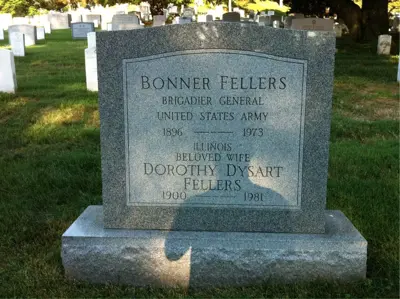
- Born: February 7, 1896
- Died: October 7, 1973
- Nationality:
- Profession:
Bonner Frank Fellers was a US Army officer who served during World War II as military attaché and director of psychological warfare. He is notable as the military attaché in Egypt whose extensive transmissions of detailed British tactical information were intercepted by Axis agents and passed to German Field Marshal Erwin Rommel for over six months, which contributed to disastrous British defeats at Gazala and Tobruk in June 1942. He was considered a protégé of General Douglas MacArthur.
