Jacqueline Kennedy Onassis Quotes
I’m not going to go down in coal mines like Mrs. Roosevelt.
Eleanor Roosevelt frequently was the political surrogate for where handicapped husband. However, she became respected and loved for she went just about everywhere including places where no President would be allowed by the Secret Service.
Jacqueline Kennedy, 1929-1995, First Lady (John F. Kennedy), Journalist and Cartoonist, Quoted in Kati Marton, Hidden Power
Sourced by: Eigen's Political and Historical Quotations

The coal miners’ strike had been going for 5 months. The major issue was the right to union recognition. The mine owners refused to do that and decided to take the strike. President Theodore Roosevelt mediated a settlement where the miners won more money but no union recognition. The great appeal and significance of this speech is that it stressed the young children who started working in the mines at ages 8 or 9 by working on the “breakers” where they broke up large chunks of coal into smaller chunks. The children never saw daylight and never had a chance for education much less a childhood. At the time, and well into the 20th century the Republican Party was adamantly opposed to any legislation regulating child labor and when two decades later public opinion finally forced Congress to pass Child Labor legislation, the Supreme Court declared it unconstitutional and it took a Constitutional Amendment. See {32240}, {642469}, and {36885}.


She was writing about the textile mills of Manchester, England in the Industrial Revolution. Workers’ wages were so low that many of them could not feed themselves and their family decently


3rd Earl Russell of Kingston


In 1927 there was a Peasant Uprising in the Hunan Province of China. Young Mau went there and wrote a report. This observation of the lesser domination of the husband where women work, has been found to be the case in almost all societies and economic systems. The result has been great resistance to equal pay for women as the consequences have been far more than just fairness. It changed the power relationship in families, political structures, communities, and changed the manpower requirements of entire societies. For example, by the end of the 20th century in America if most women did not work outside the home, the economy would collapse or immigration would have to be hugely expanded. In 20th century America, advocates of female equality have often been accused of being communists, as it was the communists who first observed this phenomenon and used it to change the society.


Opposition to the Bolsheviks

He called attention to the relationship between the poverty living conditions, sanitation, and the outbreak of cholera in the Manchester Cholera epidemic of 1832. He went on to advocate shorter working hours, better sanitation, and education for the mill workers.
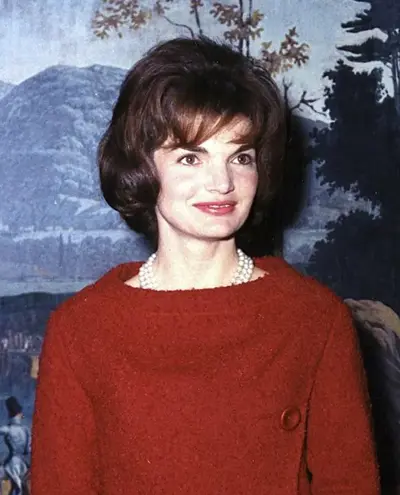
Jacqueline Lee "Jackie" Kennedy Onassis was an American socialite, writer, and photographer who became First Lady of the United States as the wife of President John F. Kennedy. Her popularity as First Lady was due to her devotion to historical preservation of the White House, her fashion sense, and her devotion to her children, which endeared her to the American public. During her lifetime, Jackie was regarded as an international fashion icon. Her ensemble of a pink Chanel suit and matching pillbox hat that she wore in Dallas, Texas, when the president was assassinated on November 22, 1963, has become a symbol of her husband's death.
