John L. Lewis Quotes
The union miner cannot agree to the acceptance of a wage principle which will permit his annual earnings and his living standards to be determined by the hungriest unfortunates whom the non-union operators can employ.
Lewis, John L. The Miners' Fight for American Standards. Bell Publishing Company, 1925, p. 41.


Morgan supported the strikers because they were abused, paid unfair wages, and were made to work in unsafe conditions. However, she believed that reform was needed and not class warfare which pitted workers and laborers against the bosses and owners. However, at the time the bosses and owners did not believe that there should be any reform and the nation was in decades of class warfare that has diminished but not ended into the 21st century. The clothing workers finally were offered higher pay and somewhat better working conditions but the owners would not recognize their union and their right to collectively bargain. At this point Morgan ceased supporting the workers actively.

He had squads of thugs that he would “rent” out to other gangsters for their enforcement activities and to unions to protect themselves from goons and intimidate non union workers. However, he would not let his men work as goons and strike busters or for companies—despite huge pay offers—to keep their workers in line, a common practice at the time.


At the time there was very little such legislation or regulation, and the little there was only occurred after massive lobbying efforts by organized labor. In modern times, often it takes a horrible tragedy to occur before the political will can be mobilized to cope with issues of occupational health and safety.

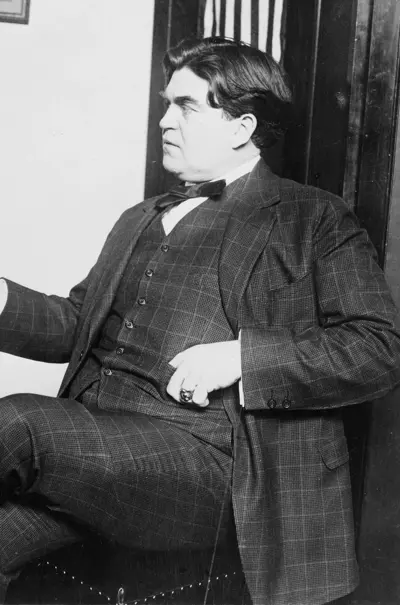
John Llewellyn Lewis was an American leader of organized labor who served as president of the United Mine Workers of America (UMW) from 1920 to 1960. A major player in the history of coal mining, he was the driving force behind the founding of the Congress of Industrial Organizations (CIO), which established the United Steel Workers of America and helped organize millions of other industrial workers in the 1930s, during the Great Depression. After resigning as head of the CIO in 1941, Lewis took the United Mine Workers out of the CIO in 1942 and in 1944 took the union into the American Federation of Labor (AFL).
