John Adams Quotes
If they say they will try me, they must try me. If they say they will punish me, they must punish me. But if they say that in peace and mercy they will spare me expulsion, I disdain and cast away their mercy, and I ask if they will come to such a trial and expel me. I defy them. I have constituents to go to, and they will have something to say if this House expels me, nor will it be long before the gentlemen will see me here again.
Adams had submitted to the House a petition from some of his constituents calling for a dissolution of the Union on the grounds that the existence of slavery nullified a sufficient part of the Constitution and the Bill of Rights so that the union should be nullified and in effect anti slavery states such as Massachusetts would not be bound by slavery supporters blocking anti-slavery legislation. State’s rights and succession cut both ways potentially in America’s race history. The vast majority of the house members were indignant that any responsible member would introduce a petition, and there were calls for Adam’s expulsion from the House from the majority of the members. The leadership however thought this might set some bad precedents, and tried to persuade the membership to on the grounds of mercy and comity just censure him. Adams responded with this famous quotation cutting the legs from under both the leadership and the membership with the result being that no action was taken.
John Adams, 1735-1826, 2nd President of the United States (Federalist, MA), Debate on his expulsion from the House of Representatives, January 21, 1842
Sourced by: Eigen's Political and Historical Quotations


After Adams’ term as President, he was elected to the House of Representatives where he served for the rest of his career. He was constantly calling for the emancipation of slaves (see {77463}) in the House debates. The Southern Congressmen were so offended by this that they got the majority of the House to pass a rule that made using the word “slavery” out of order. It was called the “Gag Rule”. Adams, one of the best legislators and lawyers of his day, then started reading in the House debates petitions of his constituents calling for an end to slavery. The Southerners called for the Speaker to declare him out of order for violating the gag rule. But Adams pointed out that the Constitution gave citizens the right to petition Congress with no controls on the petitions. Therefore the reading of the petitions was Constitutionally mandated and trumped the Rules of the House. He then arranged to have many petitions submitted which he dutifully read on the House floor to the extreme anger of the Southerners.

In 1836 the House of Representatives adopted the so-called "Gag Rule" whereby the house could not act on all further petitions regarding slavery, even though thousands of petitions were being received. Adams was one of the few who protested the Gag Rule:. Adams even submitted petitions with which he did not agree:. Every year Adams attempted to get the Gag Rule repealed. He was even threatened with censure for his efforts, but his status as an ex-president protected him. Finally, in 1844, Adams' perennial resolution carried:


The Slavery issue was so contentious that many Northern Congressmen had just given up on the abolitionist cause or never agreed with it even though in many areas of the country the majority of their constituents supported abolition.

There are many in modern times who believe that the modern Congressman has “lost touch” with the people and does not meet Mason’s criteria.

This is a formal codification of the position that was made by the great orator Edmund Burke: {194922}.


On why elected representatives would be responsive to their constituents:

Quoted in the Court’s notes of the meeting.

The Bill of Rights only has 10 amendments. These are the two that did not get ratified by the states.

Fitzhugh was a Southern iconoclast whose view of Northern labor was much like that of Karl Marx but who was an enthusiastic supporter of slavery.

This is the most formalized and sophisticated compendium of laws of the so-called “barbaric peoples” of Europe. The compilation was in many ways a documentation of the traditional laws of the Visigoths that had evolved over hundreds of years.


Congressman Preston Brooks had attacked and almost murdered, Senator Sumner, who was caught in his desk and could not defend himself. While the beating of legislators who positions that were disliked was castigated by almost all newspapers and community leaders in the North and many in the South, this editorial shows how far the polarization of American had gone before the Civil War. It also illustrated that the issue causing the schism was slavery and not as later Southern apologists suggested, different philosophies of government.

In the lowest point in Senate history, Senator Brooks snuck up behind Senator Charles Sumner, stuck Sumner a massive blow to the back of the head with a heavy stick. While Sumner was half conscious and caught in his desk, Brooks continued to beat Sumner senseless. Sumner did not die but was seriously handicapped for life. Preston attacked Sumner supposedly because Sumner made a senate speech condemning slavery practices in South Carolina and “insulted” Brooks’ cousin—a Congressman who was defending slavery. Because of the polarization between North and Southern senators, no resolution could be passed to condemn and discipline Brooks so the Senate became the only place in America where someone could beat an unarmed, defenseless man senselessly with impunity. Even some Southerners were surprised because at that time “Gentlemen” still fought duels over disputes and in those, both parties would be equally armed.

Originally it was published in Boston under the name “A Columbian Patriot.”

This distinction is the basis for the Supreme Court Decision in New York Times v Sullivan where they ruled that the libel of a public figure is not to be punished unless it was malicious and not just defamatory. In England, a person can be sued for slandering a politician. Worse, truth is not an absolute defense in a libel suit in England as it is in the United States.
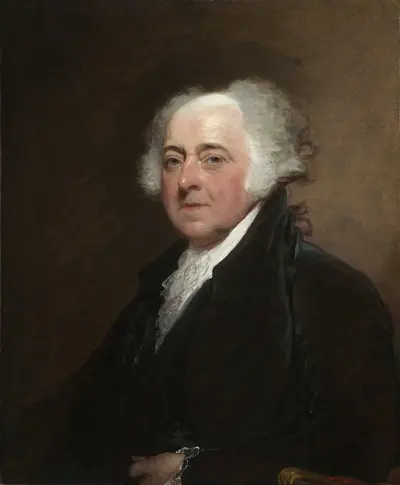
John Adams Jr. was an American statesman, attorney, diplomat, writer, and Founding Father who served as the second president of the United States from 1797 to 1801. Before his presidency, he was a leader of the American Revolution that achieved independence from Great Britain, and he served as the first vice president of the United States. Adams was a dedicated diarist and regularly corresponded with many important figures in early American history, including his wife and adviser Abigail Adams and Thomas Jefferson.
