Ahmad Hassani Baghdadi Quotes
If they are people of the book (Jews and Christians) we demand of them the jizya [a special tax] and if they refuse, then we fight them. That is if he is Christian. He has three choices: either convert to Islam, or, if he refuses and wishes to remain Christian, then pay the jizya....But if they still refuse, then we fight them, and we abduct their women, and destroy their churches. This is Islam!. As for the polytheists, We allow them to choose between Islam and war! This is not the opinion of Ahmad al-Husseini al-Baghdadi, but the opinion of all five schools of jurisprudence.
There are many different schools of thought about Islamic Law just as there are many opnions on any legal system. However, amongst the otherox Muslims there are 5 major schools of Islamic jurispredence--4 are Sunni and 1 Shiite. These 5 all share an intolerance of other religions. The Prophet allolwed Christians, Jews and Zoroasstrians to worship in their religious manner but they had to pay a discriminatory tax. No such provision was made for other religions and some of the modern Muslims try to force them, under penalty of death, to convert to Islam. After the Iranian Revolution for example, members of the Bahai religion were mordered if they would not convert. Many were hunted down and butchered.
Ahmad Hassani Baghdadi. Fatwa, 2012
Sourced by: Eigen's Political and Historical Quotations

In the early stages of Islam, Muhammad had hoped to convert the Jews and others on the Arabian Peninsula. When they refused to be converted, he warred against them usually killing the men, and taking the women and children as slaves. The result was that non-believing tribes were “cleansed” from the Arabian Peninsula. The Muslims at the time preferred children as slaves. For then they could convert the children against their will. Adults in Islam must accept Islam in order to convert. Children are regarded as having no such maturity of decision making and therefore opposition to conversion may be ignored and they may be forced. Critics of Islam and those who argue that Islam is at odds with all other religions point to this quotation. They claim that it is the only religion whose founder and fundamental scriptures demand war against others for no other reason than that they believe in a different religion. The Catholic Church during the Crusades and the Inquisition had a similar philosophy as did Christian missionaries colonizing Africa later. One difference is that most Christians today repudiate the doctrine as against the true spirit and teachings of Christ and view it as historical error, while very few modern Muslims repudiate this quotation of the Prophet.
The “People of the Book” are the Jews and the Christians who believe in the Old Testament book of God which Muslims recognize. Others who would not accept Islam would be killed, but if Jews and Christians are submissive and fell so, they may pay a special additional tax, the Jizyah.

See {586039} for a quotation that goes further and seeks to punish and humiliate the non believers. This sura is often used by those wishing to illustrate the intolerance of Islam—especially of other religions. They fail to put this into the context of the Old Testament which proscribed death for heretics or the history of Christianity regarding the murder of nonbelievers. The difference is however, that a very small proportion of Jews or Christians today believe in following Biblical instructions in this respect while the proportion of Muslims who believe in the literal interpretation of scripture on these points is much larger. However there are Islamic modernists and moderates throughout the world who reject this notion of warring on all other religions and there is a struggle going on within Islam itself.
The “People of the Book” were the Jews and Christians who received special status in Muslim lands and societies. Despite the enmity and Muslim fundamentalist terrorism of modern times, Jews have historically lived in relative harmony in Islamic lands, and with the exception of the Christians in the Crusades, Christians were also given a place in Muslim societies. The “Book” refers to the Bible.

The Empress provided freedom of religion in order to induce many settlers to immigrate to Russia. However, the clerics of the Russian Orthodox Church were terribly fearful that they would lose parishioners to other religions and they prevailed upon Catherine to outlaw preaching and conversion of the Russians. However, they were all for any attempt to convert the Muslims in the Russian Empier or at the borders. This limitation on conversion lasted until the Communist Revolution when the Communists even prohibited the Russian Orthodox from converting people. It was not until the fall of the Soviet Union that other religions were allowed to try and convert Russians and even then the number of sects that were allowed to do so were limited.


See {617160} for a similar legal opinion. The concern was that poor Muslims may desert their faith when they see how well-dressed the tolerated people, Christians and Jews, are. They might conclude that Christianity or Judaism is better at making people wealthy than was Islam. See {617162} for a Koranic support of the idea. The Western view of this is generally, that is what the marketplace of ideas is all about. In 21st century America, Jews and Mormons on the average were the wealthiest religious groups. The logic of al-Ramli is that Mormons and Jews—each only 6 percent of the population—should not be allowed to show their wealth, lest Roman Catholics for example—25 percent of the population—will convert from Catholicism to the other two religions. From a democratic point of view, the response should be, we so be it. That is their choice. But America is the living proof that the assumption of conversion and loss of faith is per se wrong. The Mormons and Jews are visibly more successful, yet there are very few Roman Catholics leaving their church and converting to the two wealthier religions. There are some, but not at any greater rate than people convert from “wealthier” religions.
See {617157} for a similar legal opinion. The concern was that poor Muslims may desert their faith when they see how well housed the tolerated people, Christians and Jews, are. They might conclude that Christianity or Judaism is better at making people wealthy than was Islam. See {617162} for a Koranic support of the idea. The Western view of this is generally, that is what the marketplace of ideas is all about. In 21st century America, Jews and Mormons on the average were the wealthiest religious groups. The logic of al-Ramli is that Mormons and Jews—each only 6 percent of the population—should not be allowed to show their wealth, lest Roman Catholics for example—25 percent of the population—will convert from Catholicism to the other two religions. From a democratic point of view, the response should be, we so be it. That is their choice. But America is the living proof that the assumption of conversion and loss of faith is per se wrong. The Mormons and Jews are visibly more successful, yet there are very few Roman Catholics leaving their church and converting to the two wealthier religions. There are some, but not at any greater rate than people convert from “wealthier” religions.
The Jews, Christians and Zoroastrians were allowed to maintain their own religion and live as 2nd class citizens and pay a special tax, but ALL other religions were to be forced to convert.

This quotation is important because it emphasizes an aspect of freedom of religion that is not usually discussed—the freedom to LEAVE a religion. As an Islamic reformer born in Iran, this notion is extremely important. Under Sharia—Islamic Law—capital punishment is required for anyone who converts from Islam to any other religion. This has been made a part of the civil law of many Islamic nations from Afghanistan to Saudi Arabia as well as Iran where Sharia IS the civil law. There is no other religion in the world which makes conversion away from the religion a capital crime requiring execution. Executing people who leave a religion is a major violation of the Universal Declaration of Human Rights.
One fascinating thing about this quotation is that the assumption is automatic that the war is for the purpose of converting the enemy to Islam. At the beginning of Islam this was the only reason for initiating a war. After the death of the Prophet, greed, jealousy, and power became causes of war for the Muslims just as with most other peoples. This quotation has been used by people in conflict with Muslims to refuse any Muslim overtures for a cease fire or truce, as it will not lead to peace unless they are willing to convert and it is likely that the Muslims are getting the worst of the battle and just want to regroup and obtain respite or reinforcements. According to this fatwa, Muslims will never agree to a truce if they are winning or even taking many casualties. Or they may make a truce with “anti-Islamic” conditions with no intention of adhering to the conditions—that is if they are following the Muslim jurisprudence which some Muslim leaders do not,
His quotations are very important because he wrote many of the Islamic legal opinions that governed Muslim Spain and influenced the Arabs of North Africa. This is yet another example of the classic antipathy that many Muslims have for People of the Book—Christians and Jews.

Unlike other conquerors who wanted their wealth, property, animals or women, this was an offer that was almost too good to refuse even if the community were well fortified and had organized soldiers. It is important to note that these options were not available to all people. The Prophet had decided to allow Jews, Christians and Zoroastrians to practice their religion and pay the fizya tax which was not very high. The Persians were Zoroastrians and hence the did not have to convert which most other people did. The Muslim conquest of Persia, therefore, was much easier than most other places.

Jews were forced to convert to Catholicism under penalty of death. While the archbishop did not approve, he did not describe the murders in moral terms or used his great religious power to stop the practice.
For many extremists Muslims, this sura calls for the torture or killing of the enemies of Islam. For the more moderate Muslims, the penalty of opposing Islam should be expulsion or banishment. The further modern complication of this sura is the definition of “making war with Allah.” To some extremists, it is writing or publishing anything contrary to their view of Islam; it is occupying any Islamic nation or warring with that nation even though the basis of the war might have nothing to do with religion; it is bringing a Bible into an Islamic nations; it is allowing alcohol to be sold and served; it is opposing their discriminatory customs and laws; it is pressuring them not to stone adulteresses.
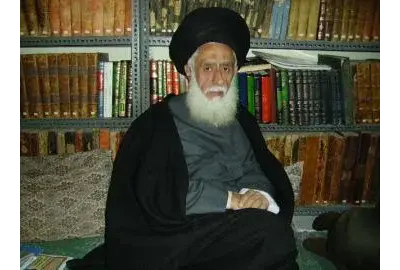
Grand Ayatollah Sayyid Ahmad Hassani Baghdadi (Arabic: السيد احمد الحسني البغدادي) (born 1945) is an Iraqi Twelver Shi'a Marja.
