Richard Henry Lee Quotes
If the King’s ministers had searched through the world for a person the best-fitted to ruin their cause, and procure union and success for these colonies, they could not have found a more complete Agent than Lord Dunsmore.
Lord Dunsmore was John Murray, 1732-1809, the Royal Colonial Governor of Virginia who was one of the least competent of the British officials in Colonial America.
Richard Henry Lee, 1732-1794, Member of the Continental Congress, Signer of the Declaration of Independence, U.S. Senator (VA) November 1775
Sourced by: Eigen's Political and Historical Quotations

2nd Earl of Guilford. This bill cut off all trade with the American Colonies. It was meant as pressure to cease the rebellion. It did not work.

Americans were by no means united in wanting to take up arms against Britain. Relatively few of the loyalist quotations have come down to us, but here is one. It also illustrates why some Americans wanted complete independence: So that they could escape their debts to English merchants. Most however had more noble and unselfish motives. As a matter of fact, the American Revolution is unusual in the sense that there were so many men of substance who sacrificed much of their material wealth for the American ideal. There were also the rogues and opportunists as Galloway describes.

The crackdown on Boston which was intended to set an example and intimidate all of the other colonies backfired, and the British were told about it by their own officials in America. But they were so rigid and ideological about monarchy, that the stimulated rebellion rather than suppress them.

Wilkes was a strong advocate for the American cause—so much so that some in Parliament tried to deny him his seat in Parliament for his disloyal point of view.

Note that Britain was blockading Boston in the middle of 1775, some time before the outbreak of battles in Concord and Lexington in 1776. What Gates did not tell Lord Dartmouth, and maybe did not know himself, was that the skilled Massachusetts sailors smuggled a great deal through the blockade in small boats at night landing in the many inlets and coves in the Boston area. Also, do not think of Boston in 1775 as today. At that time most people had, in the city, their own farms and gardens and grew much of their own food. The Boston Commons was a common area for grazing sheep. So the British Blockade of Boston was not very effective.

Franklin was also an accomplished political cartoonist.

Today, most Americans know little of Samuel Adams but see John Adams as a much larger and more important figure. But for the American Patriots fighting the Revolution, it was Sam Adams who made the most outstanding contributions to the political strategy and leadership.


This is a very interesting quotation. A contemporary historian tells us how rapidly the American colonists organized when Parliament passed the Tea Tax. Even with the Internet and social media it would be hard to organize representation from 13 states that fast today. The word of mouth and mail of the day was surprising to most of us. The passion on the issue and the public interest must have been extraordinary. Ramsay was the first major historian of the American Revolution.

1st Earl of Oxford. While clearly a gross overgeneralization, the Austrian leadership were in the process of making some very stupid policy decisions that led to WW I and the destruction and breakup of their empire.
Ramsay was discussing the events leading up to the American Revolution. He and many English historians believe that had the British repealed a few if the hated taxes and given America some representation in Parliament, the conflict could easily have been avoided. Ramsay was the first major historian of the American Revolution.

This quotation is interesting for two reasons. First, this is one of the most severe criticisms of a cabinet and ministers in English history. The second reason of interest is that it was these same ministers who made the policies and the decisions that would bring on the American Revolution. Were it not for the incompetence, there might not be a United States today. Pitt’s son later also castigated the ministers. See {641503}.

Ministers refers to the Government Ministers, not to clergy.

Martha Washington herself endured the winter hardships of Valley Forge with the troops whose morale was much uplifted by her presence. The Tom Cat howled at night attracting females waking her and others. She gave the name as Alexander Hamilton was one of her husband’s key aids and attractive women were constantly visiting him in the camp. He had always had a very active romantic life. There is no record of whether he thought the appellation humorous or was insulted by it.
This was the first proposal for a united American government. It provided for a “President-General” and a unicameral “Grand Council” with representation proportional to population.
Franklin himself was a great writer and publisher. However Paine was so extraordinarily great as a writer that he not only expressed the basic ideas of the Founding Fathers and the ideals of the American Revolution better than anyone else, but his “Common Sense” was not only an intellectual, critical, political, and propaganda success, but it was the best selling publication in America. Imagine a political tract of today outselling all the novels, dictionaries and Bibles. Arguably, “Common Sense” was the greatest commercial publication in American history. No single, specific publication since has reached a greater proportion of citizens of the nation. And it was sold commercially, not given away.
At the beginning of the dispute between America and England, the issue was the raising of internal American taxes by Parliament without any American representation in Parliament. The issue escalated and when the British began using force, independence then became the American objective.


The colonists did not have great support from England before the Revolution especially with science and technology were British policy was to keep the colonies dependent on the mother country. As a result many Americans had to be very ingenious in order to function and they invented many clever ways of doing things without the right tools and equipment. Under wartime conditions this served them well.

Montgomery was killed later that year commanding the failed attempt to capture Montreal in Canada
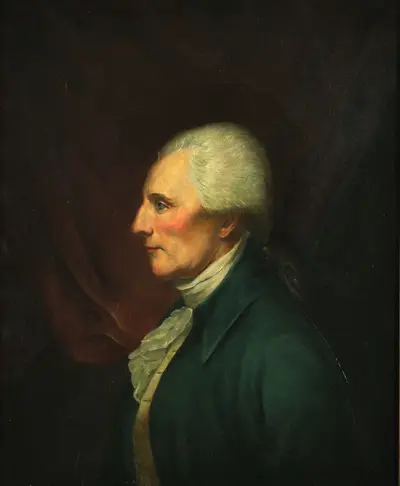
Richard Henry Lee was an American statesman and Founding Father from Virginia, best known for the June 1776 Lee Resolution, the motion in the Second Continental Congress calling for the colonies' independence from Great Britain leading to the United States Declaration of Independence, which he signed. He also served a one-year term as the President of the Continental Congress, was a signatory to the Articles of Confederation, and was a United States Senator from Virginia from 1789 to 1792, serving during part of that time as the second President pro tempore of the upper house.
