Richard Montgomery Quotes
… the sweepings of the New York streets.
Montgomery was killed later that year commanding the failed attempt to capture Montreal in Canada
Richard Montgomery, 1738–1775, Revolutionary War Major General, Description of the soldiers of the first New York Regiment of which he was asked to be the Deputy Commander, 1775, .
Sourced by: Eigen's Political and Historical Quotations

Rush ran the hospitals for the Revolutionary Army and talked to many officers and enlisted men, and also observed much of the British military practices. These suggestions were discussed but never passed as regulations. They are fascinating insights into the problems of the general officers of the time who were generally selected for their socioeconomic status rather than other qualifications. Note the drunkenness limitation for a commanding general was proposed to be limited to only 1 allowed bout of drunkenness every 24 hours. It was, he thought, totally unrealistic to require generals to be always sober when on duty. With the mediocre quality of senior officers, Washington had to depend on foreigners like Lafayette, Von Steuben and others. And Generals who were leading attacks out in front of their men like Benedict Arnold immediately became heroes and one of the reasons he ended up as a traitor was that he thought that he was badly treated relative to the “society” Generals who would not accept him and denigrated his exploits when they themselves had never been close to a battle front.
Conway was made a Major General by Congress and appointed as Inspector General of the Revolutionary Army. However, then as now, officers who told the truth about the failings of other senior officers were not well liked by the officer corps. The cover up was the norm even then. Rush ran the hospitals for the Revolutionary Army and talked to many officers and enlisted men, and also observed much of the British military practices.

The NY legislature was dominated by Republicans at the time.

Describing Secretary of State James Baker:


The landowners of New York’s Dutchess County were relatively well to do. They had been enthusiastic supporters of the Continental Congress so that the latter could impress upon the British Authorities the economic injustices but the Dutchess County landowners were less enthused about confrontation over incidents in far away Boston. The plea here was to principle, patriotism and not to self interest.


During the American Revolution many patriot clerics argued against the monarchy by claiming that God has given Kings to the Ancient Jews—who had a type of Republic—as a punishment. Therefore monarchy is to be avoided.


This editorial from an Alabama newspaper in 1856 is a wonderful illustration of the animosity held by many in the South towards the North. It also shows the major difference in egalitarianism between the North and the South at that time. The only Southerners who could read were the upper class who were terribly fearful of the effects of upward mobility of whites in a slave free industrial democracy. “Mechanics” at the time referred to all skilled craftsmen.

Men were being recruited to volunteer for the new American Revolutionary army throughout the colonies. However, the sons of many Virginia planters were neither recruited, nor did most of them volunteer. The reality was that few of them had an education that might fit them for many of the military needs. However, they were not very fit to be foot-soldiers (infantry) as they were mostly, having lived on a slave plantation where they did not work and were truly indolent and would not have the discipline or endurance to march long distances. Jefferson came up with this idea: Create a special Cavalry unit. They could all serve together and would not be a bad example to other men, and they all could ride a horse as that was their primary mode of transportation. This is another of the examples negative effects on whites what Negro slavery wrought.

“Hapsburg” was the family name of the Emperors of the Austro-Hungarian Empire. As typical of a heredity absolute monarchy, it was accompanied by a heredity aristocracy from which all the generals and senior officers of the military were selected. Their social graces and skills were assured but not their capability as leaders of any kind—especially military officers.

He was right and his leading just a few American marines and capturing much of the area proved it.

Lord Dunsmore was John Murray, 1732-1809, the Royal Colonial Governor of Virginia who was one of the least competent of the British officials in Colonial America.
Socioeconomic class was a major factor in the Continental Army just as it was in the British Army. New York, unlike New England, did not have the clear-cut majority in favor of independence. Most of the working class at this stage had no opinion on independence as they did not need to and were not of the social class that had been discussing and arguing about the relationship with England. The upper class had been discussing the issue for some time and were polarized into Patriot and Loyalist sympathies. When the Patriots of New York voted to raise its first Regiment, the first people to volunteer were the men of the upper class who had been debating the question for some time. Because of their social class, they had to be officers. The lower classes got into the intellectual and political debate later, and they too were divided. The Patriots among them then volunteered to provide the privates and other enlisted men to the NY regiment. But the early contingents of New Yorkers were very top heavy with officers. While not as rigid as the Continental Army, the modern American Armed Services are still affected by this tradition. While there are many exceptions, there is still a strong correlation between military rank and socioeconomic family status.


With this 1894 prediction, the London Times warned that the era’s primary source of transportation energy—the horse—would soon create an environmental crisis.

Montgomery was killed later that year commanding the failed attempt to capture Montreal in Canada

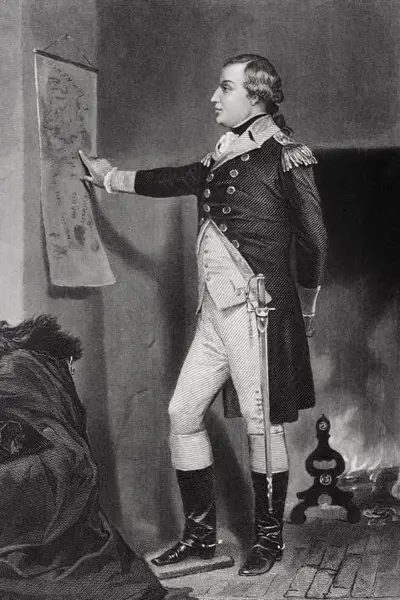
Richard Montgomery was an Irish soldier who first served in the British Army. He later became a major general in the Continental Army during the American Revolutionary War, and he is most famous for leading the unsuccessful 1775 invasion of Quebec.
