Sharad Pawar Quotes
If prices drop, we have to protect farmers from distress; if prices rise, we should be ready to pay market rates.


Hoover was the Food Administrator at that time. Although he gave lip service to the free market economy concept, he was proposing government price controls and rationing. When the free market was not functioning, at this time in his career, he was willing to use government controls and regulation. By the end of 1918 over 250,000 food-handling corporations, firms, and individuals were under Food Administration licenses. Meat, fish, poultry, eggs, butter, milk, potatoes, fresh and dried vegetables, and fruits, canned goods, the coarse grains and rice, vegetable oils, coffee, and such various commodities accessory to food-handling, as ice, ammonia (for ice-making), arsenic (for insecticides), jute bags, sisal, etc., were under direct control. Ironically, later when he was President and faced with the Great Depression, he had become much more rigid and would not “interfere” with the free, private market and use government to solve the national problems. It was Franklin Delano Roosevelt who did that after Hoover would not. At the time he gave this speech, Hoover was not very political and was more of a technocrat. It may have been that by the time he became President he was intellectually and politically locked in to Republican Party conservative economic ideology.


Abd al-Rahman Ibn Mohammad. He is generally regarded to be the World’s first social scientist. The largest statue in Tunisia of not of a military leader of king, but of this social scientist.

The House had been debating an agricultural subsidy bill. Family farmers had in certain years not been able to sell their produce for the cost of growing it and subsidies made up the difference. But in this particular year, farm prices were very high and the agricultural subsidies were “welfare for the rich.” Farmers who earned over a million dollars in a great agricultural year would get “subsidies.” Typically members of Congress were either opposed to agricultural subsidies or opposed. Congressman Kind had a more nuanced view.


Executed by the English for his part in the Easter Uprising. This was a creative idea to being technology to bear on small farms. America was exploring cooperatives and other devices of trying to allow people who were not rich and had little or not capital, to utilize the emerging technology that would be so important.

Manava Dharma Shastra. Ancient Hindu India had what may well have been the most regulated mercantile economy of any society in history. All prices for all goods were to be set by the king. In order to prevent the stultifying effect of price controls, the Hindus required that the prices be reset very frequently to reflect various market conditions. It was a highly regulated form of capitalism. This text is a part of the Hindu Holy Texts. Hindus believe that Manu was a prophet whose text is revealed or inspired.


To the modern reader utterances such as this from a Conservative Prime Minister seem astounding. However, the Great Depression existed in Canada as well as the United States, and Franklin Delano Roosevelt was not the only world leader who would reach the conclusion that business and capitalism must be profoundly regulated and the system changed if it was to be saved.

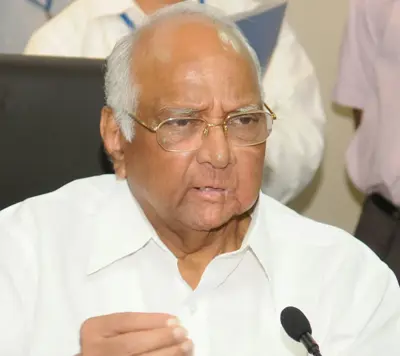
Sharad Govindrao Pawar, is an Indian politician with over sixty years of public service. He holds a position of prominence in Indian politics as well as in the regional politics of Maharashtra. During his long career, Pawar has served as the Chief Minister of Maharashtra on three occasions and held the posts of Minister of Defence and Minister of Agriculture in the Government of India. He is president of the Nationalist Congress Party (NCP), which he founded in 1999, after separating from the Indian National Congress. He leads the NCP delegation in the Rajya Sabha, the upper chamber of the Indian parliament. He is one of the founders of Maha Vikas Aghadi, a post-poll alliance in Maharashtra between Shivsena, NCP, and INC.
