Nana Patekar Quotes
Farmers will not see good days unless their produce gets a guaranteed price. Even a notebook, a pen, or a soap has a price printed on it, but the milk that farmers sell do not have any price.


Hoover was the Food Administrator at that time. Although he gave lip service to the free market economy concept, he was proposing government price controls and rationing. When the free market was not functioning, at this time in his career, he was willing to use government controls and regulation. By the end of 1918 over 250,000 food-handling corporations, firms, and individuals were under Food Administration licenses. Meat, fish, poultry, eggs, butter, milk, potatoes, fresh and dried vegetables, and fruits, canned goods, the coarse grains and rice, vegetable oils, coffee, and such various commodities accessory to food-handling, as ice, ammonia (for ice-making), arsenic (for insecticides), jute bags, sisal, etc., were under direct control. Ironically, later when he was President and faced with the Great Depression, he had become much more rigid and would not “interfere” with the free, private market and use government to solve the national problems. It was Franklin Delano Roosevelt who did that after Hoover would not. At the time he gave this speech, Hoover was not very political and was more of a technocrat. It may have been that by the time he became President he was intellectually and politically locked in to Republican Party conservative economic ideology.

Herbert Hoover was then the Food Administrator and in part with his assistance, Congress passed The Food Control Law August, 1917 which contained a provision, guaranteeing a wheat price to the farmer of two dollars a bushel. This was the beginning of Agricultural Subsidies and Corporate welfare for the large farm companies. It was passed under the Democratic Wilson Administration but Republican Herbert Hoover was one of the major supporters.

She advocates cutting out more of the middle men in the food chain and having the farmer earn more money. One difficulty with her idea is that the vast majority of farming today is done by large corporations who are already making a good deal of money and consumer groups do not want to further enrich these corporations at the expense of the consumer. However by buying directly from the small farmer who grows particularly good food, she can accomplish the objective on a small scale.


Manava Dharma Shastra. Ancient Hindu India had what may well have been the most regulated mercantile economy of any society in history. All prices for all goods were to be set by the king. In order to prevent the stultifying effect of price controls, the Hindus required that the prices be reset very frequently to reflect various market conditions. It was a highly regulated form of capitalism. This text is a part of the Hindu Holy Texts. Hindus believe that Manu was a prophet whose text is revealed or inspired.
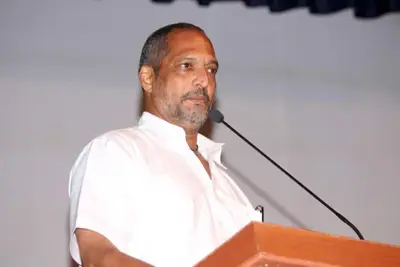
Vishwanath Patekar, better known as Nana Patekar, is an Indian film actor and writer, philanthropist and filmmaker, mainly working in Hindi and Marathi cinema.
