Nestor Kirchner Quotes
We ask from the heart that supermarkets, which are now more profitable and selling more, help us to take care of the pocketbook of the people by not raising prices.
Kirchner, Néstor. "Address on Price Agreements." Presidencia de la Nación Argentina, 22 Nov. 2005, Casa Rosada, Buenos Aires. Speech.

The Black Plague, which raged in Europe from 1347 to 1349, had left relatively few able bodied people alive. Given this shortage of labor there was a rapid inflation, especially to the distress of the landed class who had to pay much more for their food. The king therefore established what amounted to price controls, wage controls and forces labor. See {611125} and {611126}


Manava Dharma Shastra. Ancient Hindu India had what may well have been the most regulated mercantile economy of any society in history. All prices for all goods were to be set by the king. In order to prevent the stultifying effect of price controls, the Hindus required that the prices be reset very frequently to reflect various market conditions. It was a highly regulated form of capitalism. This text is a part of the Hindu Holy Texts. Hindus believe that Manu was a prophet whose text is revealed or inspired.


Brandeis was U. S. Supreme Court Justice Louis D. Brandeis, 1856-1941, who wrote that competition would control prices if only healthy competition could be maintained—the problem was resolved by both increasing competition and much more stringent regulation of corporations.


Samuel Langhorne Clemens, 1835-1910. Bribery of Congress and other legislatures was very common at that time. In modern times, bribery has become less common, with the function being assumed by campaign contributions. Relative to the cost of living, these “prices” in the modern era are far greater than the bribery prices of the 19th Century.
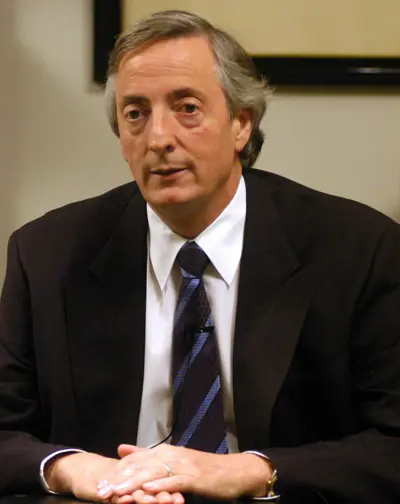
Néstor Carlos Kirchner Jr. was an Argentine lawyer and politician who served as the 50th President of Argentina from 2003 to 2007, Governor of Santa Cruz Province from 1991 to 2003, Secretary General of UNASUR and the first gentleman during the first tenure of his wife, Cristina Fernández de Kirchner. He was President of the Justicialist Party from 2008 to 2010. Ideologically, he identified himself as a Peronist and a progressive, with his political approach called Kirchnerism.
