Abd Al-Bari Atwan Quotes
If Iranian Missiles Hit Israel, I Will Dance in Trafalgar Square.
It is easy for those in London to wish for missiles and other weapons to be launched at others. If an Iranian missile were to hit Israel, he would celebrate. Then when the Israeli retaliation strike hits Iran, he will be among the first to call for a cease fire and plead for intervention lest there be bloodshed in Iran. Somehow the Middle East has a disproportionate number of people who are terribly enthused about attacking others without considering the consequence of the retaliation and counter attack.
Abd al-Bari Atwan, Palestinian Ex Patriot Editor-in chief of the London-based Arabic newspaper Al-Quds Al-Arabi., Statement on Lebanon TV and Title of Video, 2007
Sourced by: Eigen's Political and Historical Quotations

Nasser was indeed planning an attack. Israeli intelligence had discovered it, and the Israeli’s informed President Lyndon Johnson who in turn called Kosygin. Nasser and the Arabs had miscalculated again and ended up being not only defeated in the war they wanted but totally embarrassed by the incredibly poor performance of the Arab armies who greatly outnumbered the Israelis but had no stomach for a fight.


The Palestinians were split between supporters of Hamas and Fatah. The former was a terrorist organization which refused to recognize the right of Israel to exist and whose charter called for the killing of all Jews. The latter, accepted the right of Israel to exist and was committed to peace and coexistence with the Jewish state. They had fought a civil war and Hamas controlled Gaza with well over 1 million people which they seized for force and killed of forced out Fatah Representatives. Fatah was the elected ruling party of the West Bank, the larger and more populous of the Palestinian territories. There was little chance of any peace given that split. However, Israel which had undergone over 7000 rockets fired upon them by Hamas, stated that they refused to negotiate with the Palestinians as long as the Hamas terrorists were a part of the control of the potential Palestinian state. They would only discuss a 2 state solution if Hamas agreed that they accepted the right of Israel to exist in their general territory as a Jewish State, Hamas would accept and follow previous agreements made with the Palestinians, and Hamas would give up terrorism and the objective of killing Jews. So either Hamas would have to change its policies or Israel would negotiate with an organization that claimed it would never accept the existence of that country as a Jewish state. Al-Masri thought that the agreement he had mediated, was a necessary first step and was constructive for all the parties.

The Minister equates the unintended consequences of war and civilian casualties with a terrorist retaliation which has as its purpose the killing of as many civilians as possible. The proliferation of terrorism complicated the ethics of counter terrorism. In the case of Palestinian terrorists their tactics included using civilian facilities---schools, hospitals, homes---from which to launch rocket attacks or to store weapons or hide terrorists. Under international laws of war, a civilian facility and the civilians in it become legitimate military targets the minute that weapons are stored in or fired from that location or that location is used for planning, training, equipping or manufacturing of military material. Palestinian terrorists claim that even though civilians were harmed in legitimate, legal attacks on military targets, a proper response is to send suicide bombers into civilian areas and preparing the explosives with nails and rat poison to cause as much pain as possible.


This view has had a profound influence on the attitudes and actions of many Israelis in dealing with Arab terrorism. “Proportionate” retaliation is only retaliation and perhaps vengeance, but this doctrine developed out of frustration that little else worked has in many subsequent occasions driven Israeli government defense policy. The Lebanese War of 2006 was perhaps the best illustration.

The threat was to use nuclear weapons on Iraq if Saddam Hussein fired any missiles at Israel armed with Chemical Weapons which Iraq had at the time. Saddam fired some missiles but all had conventional explosives which did little damage. However, Israel was not even involved in the Gulf War. The threat obviously worked.


Hamas had seized power in a coup of the Gaza Strip, and in July of 2014 they fired thousands of rockets into Israel with a stated aim to kill as many Israeli men, women, and children. The Israelis responded to this act of terrorism and war by a set of air power attacks on the Hamas infrastructure and military targets. They even notified the Gaza population of each target that they before the strike so civilians who might be there could evacuate. Hamas, however, told the people to stay and not to evacuate. They also stored and fired their rockets in civilian institutions like schools and hospitals, thereby turning the institution into a military target according to the Rules of War. United Nations officials observed the Hamas practice in Gaza schools and informed the Secretary General who was furious and made this statement—particularly harsh for a leader of the UN who generally tries to avoid attacking anyone.

The report was from Heinrich von Tschirschky, the German ambassador to Austria-Hungary. He recommended that Germany persuade Austria-Hungary to not attack Serbia, not realizing the German leaders had already planned a war with Russia and saw the issues between the Austro-Hungarian Empire and Serbia was a good excuse to implement their war plans (see {642092}).

At the time YaAlon was Rabin’s Chief of Intelligence.
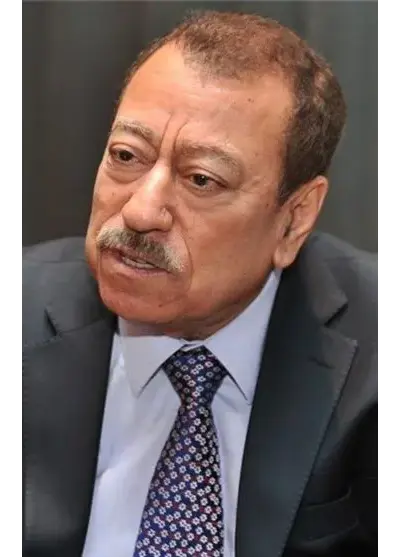
Abdel Bari Atwan is the editor-in-chief of Rai al-Youm, an Arab world digital news and opinion website. He was the editor-in-chief of the London-based pan-Arab newspaper Al Quds Al Arabi from the founding of the paper in 1989 until July 2013.
