Elizabeth I Quotes
If any person or persons dwelling or inhabiting within this your realm, or in any other your highness's realms or dominions, of what estate, dignity, or degree soever he or they be, after the end of thirty days next after the determination of this session of this present Parliament, shall by writing, printing, teaching, preaching, express words, deed or act, advisedly, maliciously, and directly affirm, hold, stand with, set forth, maintain, or defend the authority, preeminence, power or jurisdiction, spiritual or ecclesiastical, of any foreign prince, prelate, person, state, or potentate whatsoever, heretofore claimed, used, or usurped within this realm, or any dominion or country being within or under the power, dominion, or obeisance of your highness, or shall advisedly, maliciously, and directly put in ure or execute anything for the extolling, advancement, setting forth, maintenance, or defense of any such pretended or usurped jurisdiction, power, preeminence, or authority, or any part thereof; that then every such person and persons so doing and offending, their abettors, aiders, procurers, and counselors, being thereof lawfully convicted and attainted, according to the due order and course of the common laws of this realm, for his or their first offence shall forfeit and lose unto your highness, your heirs and successors, all his and their goods and chattels, as well real as personal.
Elizabeth I, 1533-1603, Queen of England, Supremacy Act, Restoring Ancient Jurisdiction, 1559
Sourced by: Eigen's Political and Historical Quotations


Adultery for a queen was considered treason. Adultery per se was not punished with death in 16th century England, but the concept was that a Queen who committed adultery was risking the royal bloodline and therefore the Crown and the Nation.


The letter was written at the behest of the Archbishop of Canterbury. The quotation appears to ratify the Pope’s unlimited power, but in actuality carves out an exception whereby the Pope’s authority might be challenged in the future. Specifically, it claims the Pope has not the authority to alter that which “by the word of God, has eternal validity.” Politically, this position put the pope in a box. By arguing against the proposition, the Pope would have to maintain that he should have the right to alter the word of God that had eternal validity which no pope wanted to state. By not challenging the doctrine, there was an opening by which the pope’s omnipotence could be challenged in the future.

Strong argued in petitioning a Connecticut court for divorce in 1788 that her husband’s abuse had removed her obligation to obey him


For many they are.

This is an amazing speech which illustrated the best of the development and growth of Islam. Note that: The ruler who has just been given ALL secular AND religious power admits candidly that he may not be the best qualified. This would not happen for over another 1000 years and even today is very rare in any society. In addition, he invites the citizens to correct him when he is wrong. Later, Calihs would, like the Christian kings and popes claim infallibiity and kill any who suggested otherwise. And daring to correct the ruler was capital offence for most of history and is even dangerous in some Muslim countries today. Last and perhaps most amazing, the new Caliph called for an affirmative leveling of the inequality of rights and power and announces it asa one of his major responsiblities. It is this kind of vision so unheard of at the time which shows us why so many flocked to Islam at the time. From a fairness, human rights, and accoutabiity of the ruler point of view Islam was the most modern of the religions then. Tragically, other forces shaped Islam for the next 1500 years and most Muslim countries become the least modern and its rulers are least accountable to the citizenry with none of the other rights and concept of fairness that Abu Bakr and other early Islamic leaders brought.


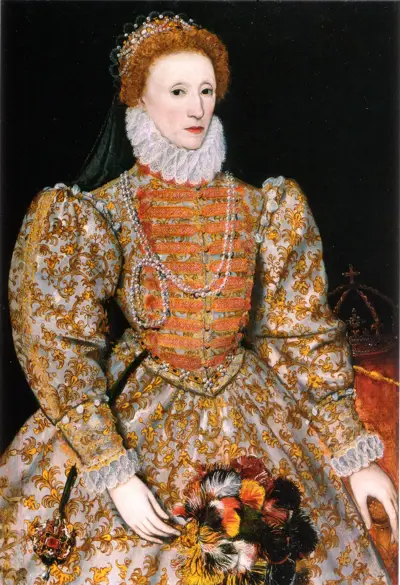
Elizabeth I was Queen of England and Ireland from 17 November 1558 until her death in 1603. Sometimes called the Virgin Queen, Gloriana or Good Queen Bess, Elizabeth was the last of the five monarchs of the House of Tudor.
