Constantine I Quotes
if any have wrongfully been deprived of the privileges of noble lineage, and subjected to a judicial sentence which has consigned them to the women's apartments (1) and to the linen making, there to undergo a cruel and miserable labor, or reduced them to servitude for the benefit of the public treasury, without any exemption on the ground of superior birth; let such persons, resuming the honors they had previously enjoyed, and their proper dignities, henceforward exult in the blessings of liberty, and lead a glad life. Let the free man, (2) too, by some injustice and inhumanity, or even madness, made a slave, who has felt the sudden transition from liberty to bondage, and ofttimes bewailed his unwonted labors, return to his family once more a free man in virtue of this our ordinance, and seek those employments which befit a state of freedom
While many think the significance of this quotation lies in the fact that Constantine I accepted Christianity, there is another significant aspect to it. Note the “cruel and miserable” phrase used to describe men being assigned to weave linen. This terror of doing women’s work illustrates the macho chauvinism and sexism of the time. It never occurred to Constantine I or many others, that if doing weaving was not consistent with a state of freedom, then the society had relegated the women to a degrading role where they could weave all day and thus never be free.
Constantine I, 280-337, Constantine the Great, Roman Emperor, Law Granting Amnesty to Christians
Sourced by: Eigen's Political and Historical Quotations

The law at that time gave a married woman almost no rights. The husband legally controlled the family assets regardless of who had earned or provided them. He aslo had absolute control of the upbringing of the children. Women could not vote and in many states were considered property of the husband.


One of the most amazing things about Abraham Lincoln is the way he grew and matured over time. In 1854 he was not sure that the Negro could be the equal of the white. As he met more Black leaders, saw more, reflected more, and had more responsibility, he grew and developed his views on race. But it was statements like this that led to the great distrust that the very strong abolitionists like Wendell Phillips had in him.


Refers to Title IX of the Education Amendments of 1972, prohibiting discrimination on the basis of sex in any education program or activity receiving federal financial assistance


Later changed the name to The Emancipator. Many are surprised that a Southern State would have had such strong abolitionist sentiment so early, but East Tennessee was a hotbed of abolition. See {614117} and {614069}

This is the earliest surviving attempt of the Romans to formulate a legal code.


Billinghurst was physically handicapped without the use of her legs. She protested and marched in protest parades using a hand propelled tricycle which the police sometimes dumped her out of and left her immobile in alleys.


This prayer was made very frequently by Jewish Men for over 2000 years. Orthodox Judaism is a sexist religion and much of the sexism of the Christian churches followed this tradition. There are 3 forms of Judaism. The Reform Jews have never used this wording. Most Conservatives synagogues have changed part of the wording to read “who has made me in your image.” In a 15th century manuscript of the prayer the sexist line was rewritten as: “who has made me a woman and not a man”, so it seems there was at least one Jewish Feminist who took action.

There were no women’s shelters in the 19th century, and the police or sheriffs would not entertain a complaint from a wife for assault, sexual or otherwise. She compared the state of women to that of fugitive slaves a few decades earlier. Then there was the Underground Railroad and other institutions which would shelter and help the slaves. There was no such mechanism for women abused in their marriage.


Sanger faced charges of obscenity for explaining birth control in a magazine she founded called the Woman Rebel. She got no political support from Wilson or the Democrats. The few politicians who did support her were Republican progressives and reformers.

Men at the time were recognizing science and nature and advocating harmony with them.
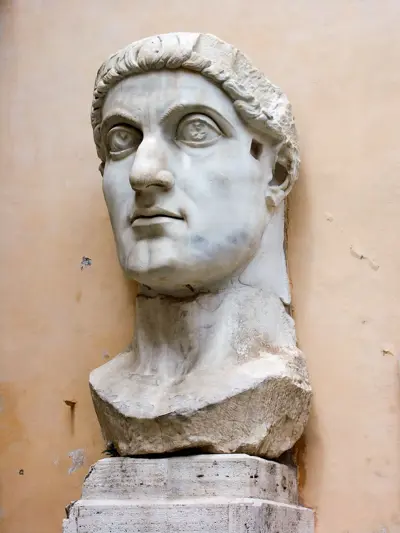
Constantine I, also known as Constantine the Great, was a Roman emperor from 306 to 337. Born in Naissus, Dacia Mediterranea (now Niš, Serbia), he was the son of Flavius Constantius, a Roman army officer born in Dardania who became one of the four emperors of the Tetrarchy. His mother, Helena, was Greek and of low birth. Constantine served with distinction under emperors Diocletian and Galerius campaigning in the eastern provinces against barbarians and the Persians, before being recalled west in 305 to fight under his father in Britain. After his father's death in 306, Constantine was acclaimed as emperor by the army at Eboracum (York). He emerged victorious in the civil wars against emperors Maxentius and Licinius to become sole ruler of the Roman Empire by 324.
