United States Quotes
If any common carrier subject to the provisions of this act shall, directly or indirectly, by any special rate, rebate, drawback, or other device, charge, demand, collect, or receive from any person or persons a greater or less compensation for any service rendered … in the transportation of passengers or property, subject … than it charges, demands, collects, or receives from any other person or persons for doing for him or them a like and contemporaneous service in the transportation of a like kind of traffic under substantially similar circumstances and conditions, such common carrier shall be deemed guilty of unjust discrimination, which is hereby prohibited and declared to be unlawful.
Price manipulation by transportation companies has been a serious problem ever since the railroads were built. Reform came in terms of the Interstate Commerce Act of 1887 which made it illegal to charge people different rates for the same or similar service. Then the country deregulated and one of the unintended consequences was the return if differential and discriminatory pricing. Two people can sit next to each other in an airplane and one has paid many times what the other has. Companies shipping goods by truck can end up paying more, the same, or less than their competitors. There have been calls for reregulation to remedy this discriminatory pricing.
United States, Interstate Commerce Act, 1887
Sourced by: Eigen's Political and Historical Quotations

The Elkins Act was a cornerstone of Roosevelt’s “Square Deal” program. It authorized the Interstate Commerce Commission (ICC) to impose heavy fines on railroads that offered rebates, and upon the shippers that accepted these rebates. The large corporations and monopolies would get rebates from the railroads and thus pay far less than their smaller competitors to ship their goods. It drove thousands of small companies out of business. This was a basic part of American law until the deregulation of the latter part of the 20th century. So what had been illegal, unethical, and immoral for almost a century, became legal, ethical and moral, but again discriminated against small companies.


Railroads and other large markets shared dominated by a few large corporations.


This Hadith together with the Prophet’s probation on interest appears to preclude a capitalistic economic structure. However, Muslim institutions have been very creative in interpreting these admonitions. Some Muslims give this a modern interpretation which prohibits price gouging but not fair profit. Regardless, it has always been interpreted to apply only to business transactions between Muslims. Profit can be made on trading and commerce with non-Muslims, and Muslim traders have always spanned the globe.

Lock’s view differs from modern American business ethics and law. He argues that regardless of circumstances a merchant may charge anything and that all consumers must be treated equally, which would eliminate preferred customers or even automobile sales practices where prices are negotiated for most vehicles. See {616334} to see how he deals with necessities of life: as issues of charity—not economics.

She was then the European Commissioner for Competition.


That philosophy became embedded in most of our utilities and necessary services. With electricity, the people who live in dense population clusters pay more so that rural residents can obtain electricity at reasonable prices. Internet, cable TV, and telephone are similar. In pharmaceuticals, Americans pay much higher rates while 3rd world countries pay less than their share. The communities who invested in water infrastructure early are today subsidizing those communities who invested little. And people who live in areas of easy water availability subsidize people in the areas where they have abused their water resources or had few to begin with. People who live in safe areas subsidize people who choose to live in flood planes or box canyons susceptible to fires by paying more for insurance so the people in high risk areas can obtain affordable insurance.

[These new "extra fees" for baggage, schedule changes, getting a good seat, etc are a new in the industry where most of the few airlines would rather match the fares and fees of the rest, rather than compete and get a larger market share. Interestingly, the best run and most profitable airline, Southwest, does not charge most of these new fees. Also, the airlines business has over the years not been very profitable. The nature of the industry makes it difficult for most airlines to make steady profits year after year, so many tend to be hogs and take advantage of consumers whenever they had the opportunity.]


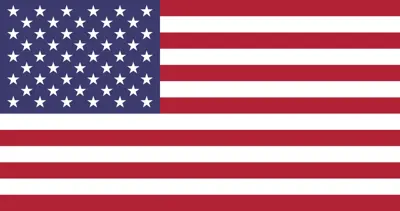
The United States of America (USA), commonly referred to as the United States (U.S.) or America, is a country composed of 50 states, a federal district, five major self-governing territories, and various possessions. The 48 contiguous states and federal district are in central North America between Canada and Mexico, with the state of Alaska in the northwestern part of North America and the state of Hawaii comprising an archipelago in the mid-Pacific. The territories are scattered about the Pacific Ocean and the Caribbean Sea. At 3.8 million square miles (9.8 million km2) and with over 324 million people, the United States is the world's third largest country by total area (and fourth largest by land area) and the third most populous. It is one of the world's most ethnically diverse and multicultural nations, the product of large-scale immigration from many other countries.
