Andrew Jackson Quotes
I would also recommend that the Marine Corps be merged in the artillery or infantry, as the best mode of curing the many defects in its organization.
The Marine Corps has not always been the respected service that they have become. On several occasions they were almost disbanded. The compromise was to make them a part of the Navy.
Andrew Jackson, 1767-1845, 7th President of the United States (Democrat, TN), First State of the Union Address, December 1829
Sourced by: Eigen's Political and Historical Quotations

Washington was not a fan of the militia. It was however preferred by much of Congress who favored local institutions rather than national ones. Competence gave way to politics then as often it does in modern times. See {613015}, {613016}, {613022}, {613027}, {621987}, {621988}, {613030}, {613033}, & {613056}.


This was an official publication of the U. S. Army. The First World War had very little affect on future military preparedness At that time conservatives in Congress were very isolationist and military preparedness was not a high priority or even a significant political issue. The Democrats then were more supportive of military spending than the Republicans. It took World War II, for which America was very unprepared, to produce a change in public and political opinion regarding military preparedness.

The French and English, with larger numbers and more experienced troops and officers, wanted the American units to come under the command or their officers and be integrated into the allied army. However Wilson established the tradition that American troops fighting abroad most always fight as an American Army under American Command. Although resented then and into the 21st century by America’s allies who are expected to fight under American command, it is a tradition that no American major politician has seriously challenged since then.

From the beginning, the issue of whether the country should have a standing army or depend on the militia and the citizen soldier has been controversial. There is a , romantic American myth about the Militiamen in Colonial and Revolutionary America—the citizen soldiers who would leave their farms and rise to the military necessity of the day. However, not only were the militia very hard to muster to duty, but most actually didn’t own or have experience with firearms, and the prevailing opinion of knowledgeable military leaders from George Washington on down was that the militia were not very good soldiers. See {613015}, {613016}, {613022}, {613027}, {621987}, {621988}, {613030}, {613033}, & {613056}

General Washington and his officers were constantly trying to get around the Southern bloc in the Continental Congress. South Carolina was willing because, perhaps more so than any other region of the country the South Carolina civilian population were suffering from the British military initiatives. See related quotes.

America is almost unique among nations where the military has never been a force that either dominated or controlled the government or acted independently from it. The Founding Fathers knew well the history of Europe and other nations, and built many checks into our Constitution and our traditions with George Washington, setting the example for American military men forever after.


Generally, the American military is much more optimistic of its ability to accomplish its objectives as that it the way they have been trained. The General warns that the same attitude will make them more optimistic and willing to tackle a very difficult if not impossible problem than most would be. So civilians in America have to question what they are doing. At the same time, there have been a number of highly sophisticated military officers who have both a military and civilian perspective and education. They tend to be more realistic and at times argue against military deployments and missions that are being considered. However, once deployed and committed, it is culturally difficult or impossible for a member of the military to be pessimistic about the eventual

He had wanted more troops for the Afghan War than President Obama would approve. The Republican members of the Congress tried to make the difference a major issue of a President not supporting his commanders. The General made this brilliant response.
He was commenting on some of the military disciplinary, logistical, intelligence, and tactical breakdowns that had occurred in the Afghanistan War.


He was objecting to the current crop of senior military officer who have little experience in fighting and much in academic, strategic and technical training. Many however see him as a dinosaur who does not realized the complex nature of the modern military missions. In general, we have won almost all of our fighting battles but often failed in our maintaining civil society, occupation, nation building, military procurement, preventing sexual assault of our own troops by our own soldiers, assuring mental health of our soldiers. Hackworth, detractors argue, wants to change what already works and ignore what does not.

Shortly thereafter, Ma Hongkui, and his soldiers ran for their lives and barely escaped to Taiwan as the Communists took over all of the Chinese mainland.

FDR, Eleanor and lost liberals of the time were advocates of a strong military, and unlike after the 2nd Word War, most of the Republicans were conservative isolationists who were opposed to spending much public money for the armed services or weapons.
Washington took advantage of the new technology of explosives that had been developed and created an innovative new unit under the command of David Bushnell (1740–1824) the Yale University student who had invented the first time bomb and the Turtle submarine.

This was a fairly unique notion. In Russia the army never played this role to the same degree. The Long March in Chinese History blended and amalgamated the people and the army in a way that was unique in World History.


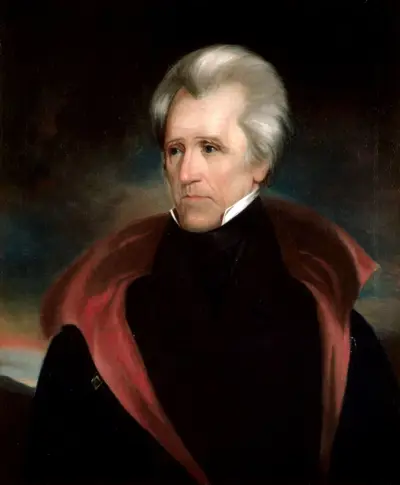
Andrew Jackson was an American lawyer, soldier, and statesman who served as the seventh president of the United States from 1829 to 1837. Before being elected to the presidency, Jackson gained fame as a general in the United States Army and served in both houses of the U.S. Congress. An expansionist president, Jackson sought to advance the rights of the "common man" against a "corrupt aristocracy" and to preserve the Union.
