Mahatma Gandhi Quotes
I will say that if there is anything like God Or Truth on earth, Hindu-Muslim unity is also possible.
Gandhi, Mahatma. The Collected Works of Mahatma Gandhi. Vol. 24, Publications Division, Ministry of Information and Broadcasting, Government of India, 1967, p. 150.

Head of the Sikh Religion. His teaching was that deeds determined the man, not the professed belief and that the existing religions turned man against man.

He led an Islamic rebellion against the Quinn Dynasty which ended in his beheading in 1873. Since the Christians were also a minority, he tried to form an alliance with them. Hatred of Christians is not endemic to Islam—politics affect the situation also. His tomb is shown in the graphic.


This quotation illustrates that a narrow orthodox view of Islam is not the only one in Arab nations. Khaled is not an obscure cleric, but a popular television personality. While his views are considered heresy by many orthodox Muslims, the narrow view is by no means universal. Orthodox Islamists believe that God has commanded that all mankind be Muslims and the ones who are not are either ignorant so need to be “educated”, or evil and therefore should be killed. However, Muhammad ordained that an exception should be made for “Children of the Book”—Jews and Christians who revere the Old Testament. This was at a time when Christians would not allow any other form of worship but Christianity. Christianity, Judaism and most other religions have become tolerant of other religions and allow open alternative worship. Islam which early on led the way to tolerance, has in many countries gone back to the intolerance that existed amongst many Christians at the time of Muhammad.


New Lanark was a Utopian commune organized by Owen.


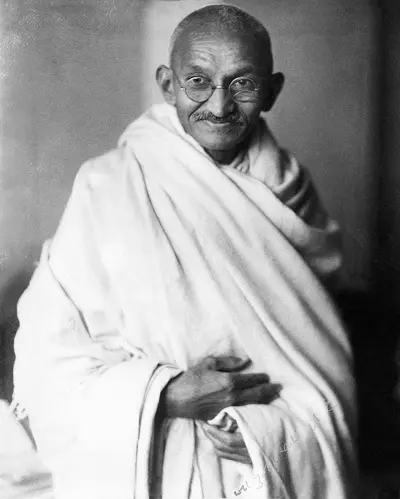
Mohandas Karamchand Gandhi was an Indian lawyer, anti-colonial nationalist, and political ethicist, who employed nonviolent resistance to lead the successful campaign for India's independence from British rule, and in turn inspired movements for civil rights and freedom across the world. The honorific Mahātmā (Sanskrit: "great-souled", "venerable"), first applied to him in 1914 in South Africa, is now used throughout the world.
