Brian Dennehy Quotes
I was in high school in 1953 when the Committee of One Million circulated a petition urging that Red China - one third of the world's population - be excluded from the United Nations. And I remember I refused to sign it, at 14 or 15 years old.
Rothschild, Matthew. "Brian Dennehy." The Progressive, 1 May 2007.

Bunch was the undersecretary-general of the United Nations who won the Nobel Peace Prize for his mediation efforts in the Middle East. Archie Roosevelt and his extreme right wing associates thought that anyone who worked in the UN was a communist and had no respect for the Norwegian Nobel Prize Committee. In the spirit of Archie Roosevelt’s father, the Theodore Roosevelt made the award to Buche and ignored Archie’s slanderous attack. Surprising to most people who know of President Theodore Roosevelt’s general liberal views, his 4th son was an ultraconservative who founded and joined racist, anti-Semitic, right wing organizations, and to the distress of many in the family and without lent his name to many of the most extreme right wing causes and organizations.


Indeed, many of the countries went communist as Kennan predicted.

First Lady Eleanor Roosevelt had more influence and visibility than any other first lady, before or since. She was First Lady for 3+ terms—longer than any other, and in addition to her official duties, she wrote a very popular daily newspaper column. As FDR was handicapped and could not travel much, she traveled all over the nation and the world. She was also very outspoken and no one ever knew whether or not she was speaking with the President’s concurrence or was on her own. She tended to be very liberal—especially in terms of the evils of racial segregation—then legal, and the problems of workers. Her broad influence was very damaging to Southern Segregationist groups and arch Conservative economic groups, who realized that her influence in the change of public opinion was much more effective at changing America than were the socialists and communists who were calling for revolution and were so unappealing that they could easily be attacked. Mrs. Roosevelt was for them more dangerous than Communism.


When the United Nations partitioned Palestine into separate Jewish and Muslim states, the armies of all the Arab countries attacked the new nation which did not even have a formal Army. The Israelis were able to win the war.

Dole was asked whether American troops should be assigned to peacekeeping duties under the command of the United Nations and Secretary General Boutros Boutros-Ghali:


A woman whose children were kidnapped and tortured by Argentine government officials during the Dirty War appealed for assistance to the Papal Nuncio. Amnesty International had validated the facts of the case.

at the end of World War I 1st Earl Lloyd-George of Dwyfor

With the successful Chinese Communist Revolution, the Nationalists were driven off the mainland of China and occupied the island of Formosa (Taiwan) and had a small garrison of soldier on two tiny islands off the Chinese Coast, Quemoy and Matsu. The communist Chinese government wanted control of all three of the Nationalist held islands. It became a campaign issue or whether or not the United States should go to war to protect the two tiny islands from the communists even though there were no civilians on them and they had virtually no value other than symbolic. Nixon, took the position that the Chinese Communists must be stopped as they had world conquest as their objective. Philosophically, many Communists of the time, following Marxist theory, actually believed that Capitalism would crumble and communism would take its place. In that sense many felt that the world would be communist. China, as we now know, was more concerned with counterrevolution by the nationalists, expansionism and growth of Vietnam (her ancient enemy), the rise of Japan, border wars with India, and constant threats from Russia and China had no military plans for world conquest.


Wright, like so many idealists had been a communist before the reality about Stalin and Russia was public knowledge. He then became a virulent anti-Communist and appeared in many international gatherings of Black artists and intellectuals. However, he felt that the CIA funding of an organization called the American Society for African Culture was undermining his message and integrity.’
At the time, the Red Scare was prevalent and many Americans were terrified of communists. It was a very effective political tactic to imply that an opponent was a communist or communist sympathizer. For another harsh smear of Stevenson, see {619523}.


The Communists under Mao won the Civil War easily as the Nationalists were not only corrupt and very unpopular, but they were not very interested in the welfare of the Chinese peasants. Further Chiang was a ruthless dictator. At the time there was great pressure for America to support any faction that was anti Communist regardless of how bad they were themselves. Davies and others who thought that we should have communications with the Communists who would soon control China, were viciously attacked by Senator McCarthy who accused Davies of “loosing China” and the Senator and some other Americans thought that the Nationalists could win the Civil War. We now know that they never had a chance, but at the time they did a very good job of promoting their cause and capability in the United States and especially in Washington. None the less, in the Red Scare, Davies was fired, only to thereafter be awarded the highest civilian award in the nation in recognition of his great and patriotic work.


This quotation illustrates the derogatory and disrespectful attitude that many high level American officials then had towards Arab leaders. No one objected to or reprimanded Symmes for his use of the word “mongrels”. And he was the State Departments leading expert on the Middle East and Arab Cultures. In the photo, Symmes is the gentlemen on the right.

He finally had to. In the government of national reconciliation, the Fascists—called Conservatives after WWII—were led by Don Manuel and he took the second place while the Republicans with the majority had the Prime Ministership. The Communists were part of the Republican coalition as they had been in the Civil War.
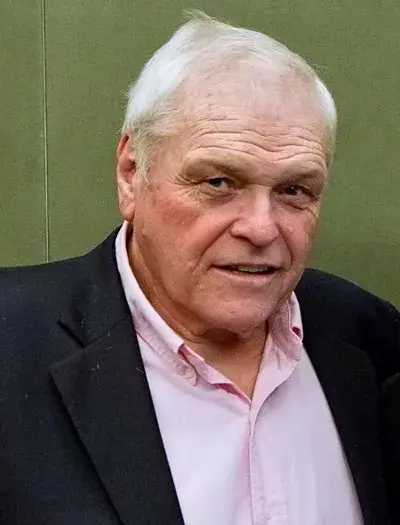
Brian Manion Dennehy was an American actor of stage, television, and film. He won two Tony Awards, an Olivier Award, and a Golden Globe, and received six Primetime Emmy Award nominations. Dennehy had roles in over 180 films and in many television and stage productions. His film roles included First Blood (1982), Gorky Park (1983), Silverado (1985), Cocoon (1985), F/X (1986), Presumed Innocent (1990), Romeo + Juliet (1996), and Knight of Cups (2015). Dennehy won the Golden Globe Award for Best Actor in a Miniseries or Television Film for his role as Willy Loman in the television film Death of a Salesman (2000).
