Vladimir Prelog Quotes
I was born on July 23rd, 1906, in Sarajevo in the province of Bosnia, which then belonged to the Austrian-Hungarian Monarchy and later, in 1918, became part of Yugoslavia.
Prelog, Vladimir. "Vladimir Prelog - Biographical." Les Prix Nobel en 1975. Ed. Wilhelm Odelberg. Stockholm: Nobel Foundation, 1976.


This quotation is a good illustration of a practice that existed in the age of Empire where two or more large powers would agree among themselves as to which one of them had the right to seize a smaller power, not part of the compact.


1st Baron Salter

Germany had just attacked Russia with whom it had a treaty. For a while, Hitler paid little attention to Italy and just gave their “ally” orders and instructions. Italian public opinion was concerned about the same question. See {627973} .

Whenever different ethnicities perceive that they are in a “zero sum game” situation where one group cannot benefit without detriment to others, the situation is always unstable and usually explodes as when Yugoslavia broke apart at the end of the 20th century after being held together by a strong leader, Tito. Note that there was a different spelling of Yugoslavia in the 1920s. The pronunciation was the same.

The Romanovs were the family of the Russian Czars while the Hapsburgs were the family names of the Emperors of Austria. The Austrian Army Chief of Staff hated the Russians and was constantly urging war against Czarist Russia. The archduke, the heir to the Austrian throne, was constantly arguing against attacking Russia. When Franz Ferdinand was assassinated, it triggered WWI. He was no longer able to have a voice against war, and Austria and Russia were soon at war. At the end of WWI, the Austrian Empire—an ally of Germany was broken up and the Russian Revolution ended the Romanov dynasty. The Archduke was absolutely right.

The Times regretted that the Germans did not speak to the Austrians more vigorously when they were threatening to attack Serbia who harbored anti-Austro-Hungarian terrorists (see {642085}). What the Times editors did not realize was that the Germans had already made their war plans (see {642092}) and the Serbian issue was just the justification they needed to implement them. So there was no real reason for the Germans to discourage the Austro-Hungarian Empire from its mission to punish Serbia.


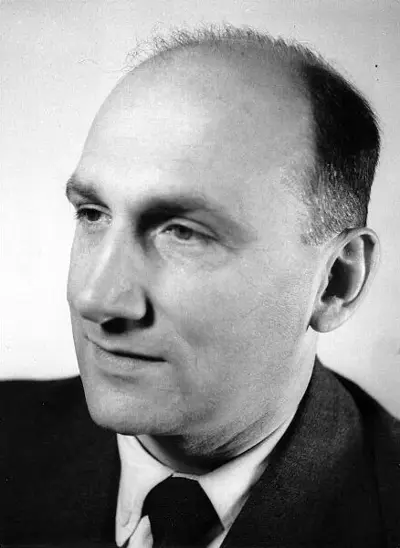
Vladimir Prelog ForMemRS was a Croatian-Swiss organic chemist who received the 1975 Nobel Prize in chemistry for his research into the stereochemistry of organic molecules and reactions. Prelog was born and grew up in Sarajevo. He lived and worked in Prague, Zagreb and Zürich during his lifetime.
