George C. Marshall Quotes
I warn you not to accept military advice too easily.
The only soldier ever so honored
George C. Marshall, 1880-1959, General & U. S. Army Chief of Staff, U. S. Secretary of State, U. S. Secretary of Defense, Nobel Peace Prize Winner Advice to Moshe Sharette, May 12, 1947
Sourced by: Eigen's Political and Historical Quotations


The “Principals Committee” is the senior interagency forum for consideration of policy issues affecting national security. It includes the National Security Director (Chair), the CIA Director, the Secretary of Defense and his Deputy, the Secretary of State and his Deputy, the Chairman of the Jount Chief’s of Staff, The Special Representative to the United Nations and other staff as invited. Clarke was almost always invited to these meeting when terrorism was discussed but he did not have a vote. This is a very important quotation for several reasons. First, it shows the influence that the Defense Department and CIA leaders had with President Bush before the 9-11 attack. It also illustrates dramatically how reluctant our military and CIA were to use drones. It was President Obama who overruled them and changed America policy to use Drones to protect American interests. It also indicates how there was a split regarding the perception of the danger of Al Qaeda and bin Laden with Clark and some of the other Principals placing more value on a military strike than the military and covert action leaders. This is not uncommon despite the fact that public perception is that it is always the military leaders who are the hawks. Also, it illustrates the problem of allowing the military point of view to always prevail in national policy making involving use of force. See {639322}.


Although the two men differed on a very important issue, each admired the other and acquitted themselves politely throughout. Congress explicitly gave the President the powers that he had exercised and won the dispute. But Dixon had also won, and upheld the law as it existed until it was changed.


The Undersecretary had misgivings just before the ill-fated Bay of Pigs invasion, and urged a cancellation:


Ironically, Lieberman was using this quotation to campaign against Bush’s son, George W. Bush.

3 years later he led America on a huge invasion and nation building project in Iraq. It turned out that had he listened to his own advice and not flip-flopped, the huge cost of the Iraq War might have been avoided.


Four years later the President embarked on a nation-building effort in Iraq which was beset with many problems.

He lost the vote on this issue, and the Congress created the first committee to investigate and oversee military affairs.


The Central Intelligence Agency had a hand in the assassination having smuggled in the weapons. However, the government takeover plan did not go as expected and there was no clear alternative plan to go to.
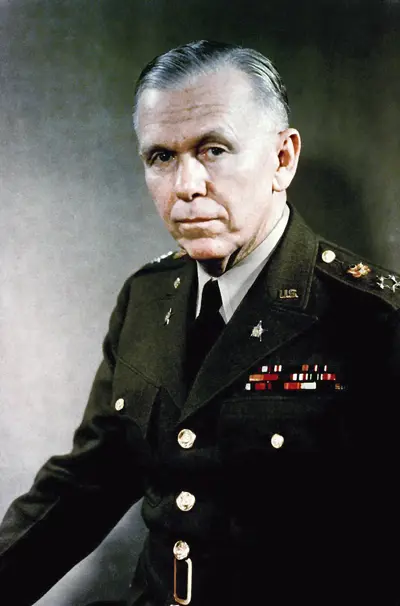
George Catlett Marshall Jr. was an American soldier and statesman. He rose through the United States Army to become Chief of Staff under presidents Franklin D. Roosevelt and Harry S. Truman, then served as Secretary of State and Secretary of Defense under Truman. Winston Churchill lauded Marshall as the "organizer of victory" for his leadership of the Allied victory in World War II. After the war, he spent a frustrating year trying and failing to avoid the impending civil war in China. As Secretary of State, Marshall advocated a U.S. economic and political commitment to post-war European recovery, including the Marshall Plan that bore his name. In recognition of this work, he was awarded the Nobel Peace Prize in 1953.
