Peter Robert Edwin Viereck Quotes
I think McCarthy was a menace... because he corrupted the ethics of American conservatives, and that corruption leads to the situation we have now. It gave the conservatives the habit of appeasing the forces of the hysterical right... and appeasing them knowingly, expediently. I think that was the original sin of the conservative movement, and we [conservatives] are all suffering from it.
Peter Robert Edwin Viereck, 1916–2006, Historian, Political Philosopher & Poet, Quoted in Tom Reiss, "The First Conservative", The New Yorker, October 24, 2005
Sourced by: Eigen's Political and Historical Quotations


Chambers was prescient and to the regret of the right wing, did not listen to him. The reality was that McCarthy, unscrupulous, mentally unstable and an alcoholic intimidated even his own party members and this one sick and flawed individual intimidated and threatened to entire American political establishment. Although Chambers called for the Republican Conservatives to act, it was the liberals of both parties who finally took him on, exposed him and brought him down.

Reacting to the disarray of the federal government as a result of the activities of Senator Joseph R. McCarthy:


After this, no other member of the Executive branch went before McCarthy again


Referring to Senator Joseph R. McCarthy:

Reacting to Senator Joseph R. McCarthy who accused without any evidence 26 state department employees of "pro-communist" leanings, McFarland, the Majority Leader, took the Senate floor:

Note the use of the word “alien” to describe the American owners of newspapers, radio and TV stations. Oliver was a right wing, racist, paranoid, fanatic and extremist. His quotations are interesting because he often said in public what many right wing extremists believed but only said in private. Joseph McCarthy was a senator who suffered from alcoholism and claimed that there were communists throughout the government and the military. However, while he claimed there were all these communists, he was never able to identify them. After a few years of his antics, he was censured by the Senate and he died shortly thereafter. Oliver and a few other extremists believe that McCarthy was silenced by a national communist conspiracy. However, McCarthy was never silent on anything.


Nixon however turned out to be very dishonest with the Watergate scandal allowing the public to see and hear what Nixon was really like. He was the only American President who resigned, as he did that to save himself from being impeached and tried for various fenonies he committed. Vidal had his number. However, Nixon was not a crook in the usual sense of the word. His violations of law and ethics did not enrich him fiscally. His corruption was the drive and mania for power and control.


Many in Congress were afraid of McCarthy as he would charge that anyone who criticized him was a Communist or Communist Sympathizer. Young John F. Kennedy was one of those who was intimidated into silence. Fulbright was one of the few who had the courage to take McCarthy on. Later, McCarthy was censured by the Senate and it afterwards it was revealed that he was a paranoid alcoholic but he did a tremendous amount of damage.

Even the President was not spared during the McCarthy era. The red scare was so pervasive, that a lunatic fringe ultra right wing organization could call the President a “communist dupe” and be taken seriously be much of the media who were themselves intimidated and might be accused of being communists at any moment. It was a very low point in America’s history.

What makes this quotation particularly interesting is that The American Enterprise Institute is a highly conservative “think tank” and Brooks himself, a leading conservative. Usually, conservatives are chided by the rest of the political spectrum for ignoring issues of fairness. In this case, an influential conservative not only admits this, but his article argues that it is desirable not to consider fairness in political decision making. Since conservative parties generally represent the more affluent members of a society, fairness arguments rarely help that constituency and are typically avoided by conservatives. However, few admit that. Here is an exception.

He was referring to governments that imposed some form of morality in their citizens. Free governments do no dictate a morality and require their citizens to follow it. He was very much opposed to Prohibition which he saw as a poor government—Herbert Hoover’s Administration—which was imposing its narrow morality on all. He was very suspicious of government actions where the government claimed that the action was for moral objectives. This is a classic Libertarian view. In general, it is Fundamentalists and ideologues who want to impose their particular morality on all. See {620693} for a related idea.

Samuel Langhorne Clemens, 1835-1910

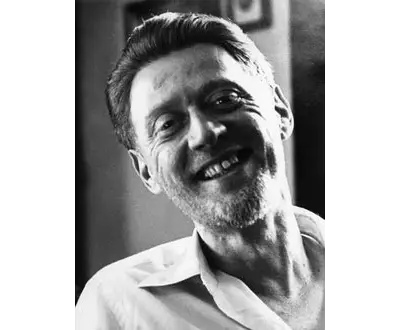
Peter Robert Edwin Viereck was an American poet and professor of history at Mount Holyoke College. He won the Pulitzer Prize for Poetry in 1949 for the collection Terror and Decorum. In 1955 he was a Fulbright Scholar at the University of Florence.
