Murray Kempton Quotes
In the end, I did not feel any cleaner than he was … I pretended once again now and then that [Senator Joseph] McCarthy was not a serious man; but I always knew that the devil in me and the larger devil in him were very consequential figures indeed
McCarthy was in many ways like Donald Trump. One was that the press loved to cover his statements and accusations that were so absurd and sensational that they sold a lot of nespapers, magazines and obtained many TV / Radio viewers/listeners. As a result he got much more media coverage that he warranted in the view of many. In retrospect, Kampton, one of the most prestegious journalsits of his era, felt that he had been guilty of wrongful judgment in covering McCarthy and giving him so much press, just as many journalists did after they covered Donald Trump in the 2016 Campaign.
Murray Kempton, Quoted in Sam Tannenhaus, "Who Stopped McCarthy?", The Atlantic, April 2017
Sourced by: Eigen's Political and Historical Quotations

McCarthy was in many ways like Donald Trump. One was taht the press loved to cover his statements and accusations that were so absurd and sensational that they sold a lot of nespapers, magazines and obtained many TV / Radio viewers/listeners. As a result he got much more media coverage that he warranted in teh view of many, President Dwight Eisenhower, who generally would not even mention McCarthy's name was percieved by Adlai Stephenson and many others as weak and fearful of McCarthy, Tannenhous and some other historians believed that fear had nothing to do with it, but that Eisenhower not only chose this as a deliberate strategy, but one that was quite effective.


_0_thumbnail_47x47.jpg)


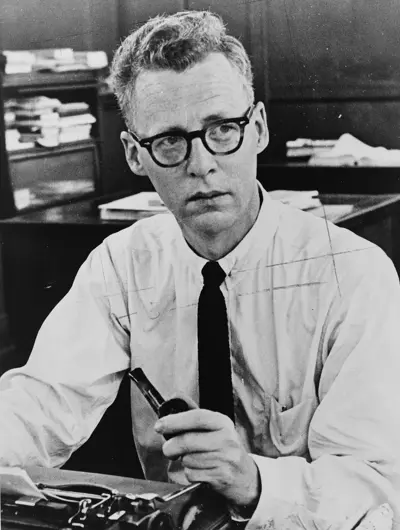
James Murray Kempton was an American journalist and social and political commentator. He won a National Book Award in 1974 (category, "Contemporary Affairs") for The Briar Patch: The People of the State of New York versus Lumumba Shakur, et al. Reprinted, 1997, with new subtitle The Trial of the Panther 21. He won a Pulitzer Prize (category, "Commentary") in 1985 "for witty and insightful reflection on public issues in 1984 and throughout a distinguished career."
