Napoleon Bonaparte Quotes
I shall not continue to suffer a hostile Prince on my boundaries, especially one who is practically a Prussian, not to say an Englishman, and who sells his subjects,
Napoleon was referring to the Elector of Hesse-Cassel. who “rented” his citizens out as soldiers (the Hessians – from Hesse), making money for himself by paying them a fraction of what he was paid for each soldier. Napoleon thought that providing merceneries to other nations for money was an immoral and disgusting thing for a leader to do.
Napoleon Bonaparte, Correspondence of Napoleon I, Vol. XIII
Sourced by: Eigen's Political and Historical Quotations


Originally it was published in Boston under the name “A Columbian Patriot.”

Honore Gabriel Victor Requiti
At that time, Russia and Germany were autocracy, and the ruler could simply take the English money and force the soldiers to fight in a war they had not stake in nor understood.


Algeria was not a French Colony but an actual province of France where an Algerian had the same citizenship and rights of a Parisian or any other Frenchmen. However the Algerian nationalists combined with the Islamic extremists wanted independence and had started a revolutionary movement primarily using terrorism. Some members of the French Parliament were liberals who thought the Algerians had a right to self-determination and favored a plebiscite; others saw Algeria as a drag on France and were in favor of having it independent. But the majority at that time saw Algeria as a part of France and opposed a change of status. Many in the army however were afraid that the politicians would "sell out" and their sacrifices would have been in vain. This is a common pattern where parts of nations want independence and the military is asked to put down any violence and terrorism. Eventually, the cost in casualties and money became so great that the government did change and allowed Algerian independence—just what the General and many soldiers had feared. In retrospect, the sacrifices were in vain.
"Imperium" is a Latin word which, in a broad sense, translates roughly as 'power to command'. In ancient Rome, different kinds of power or authority were distinguished by different terms "Imperium" referred to the sovereignty of the state over the individual—Wikipedia. The Consul was a wonderful diplomat. He had no respect for the South not only because they were fighting to maintain slavery, but also he found most of their diplomats and officials very incompetent. He found it hard to participate in all the Confederate ceremonies as he was their exhibit number one that they had International Recognition and they "exhibited him frequently. Despite this he was charming and never argumentative about slavery or other political positions that he loathed. As a matter of fact, the Southern Diplomats regarded him as a man sympathetic to the South with an understanding of their point of view. As a result he gained a huge amount of intelligence which he regularly dispatched back to London. England was neutral {35520} in the Civil War, but England did not recognize the Confederacy as a nation, else they would have sent an ambassador. The Southern politicians worked hard to get him to carry their message that if they would be recognized, they would grant England many favorable trade advantages as the English textile industry really wanted Southern cotton. While apparently sympathetic to the Southern cause, his reports contained all the negative information about the South and counseled against recognition just as the English Ambassador in Washington did—see {583131}.


The Mamlukes were Turks from the Caucasus and Georgia who were taken prisoners of Genghis Khan, who sold them as slaves to the Ayyubid Sultan of Egypt. The Sultan trained them as soldiers, and eventually they became his palace guard. They actually took over Egypt at one point in the 13th century. When the Ottoman Turks took over the Middle East, they kept the Mamlukes as elite troops and they were a major political and military force in Egypt. Napoleon’s logic was that his Frenchmen had just as much right to control Egypt as did the Mamlukes.

Executed by the English for his part in the Easter Uprising.


He conquered Korea in an act of blatant aggression, but got bogged down in a complicated occupation. He died before the Chinese part of the plan could be carried out. However, ever since China, Korea and other Asian countries have distrusted Japan and her aggressive intentions and history. The horrible Japanese record of aggression and atrocities of WWII solidified that anti Japanese sentiment which still exists to some extent.


Paine was describing the conquest of England in 1066 by William the Conqueror.


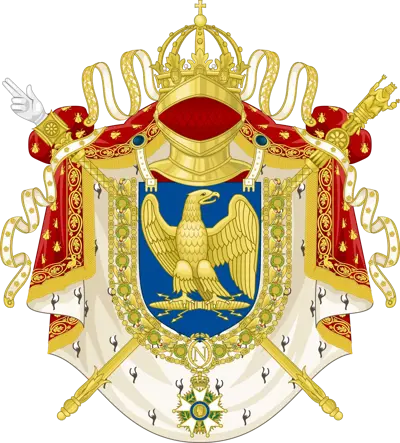
Napoléon Bonaparte was a French military and political leader of Corsican descent. He rose to prominence during the French Revolution and led several successful campaigns during the Revolutionary Wars. As Napoleon I, he was Emperor of the French from 1804 until 1814, and again in 1815. Napoleon dominated European and global affairs for more than a decade while leading France against a series of coalitions in the Napoleonic Wars. He won most of these wars and the vast majority of his battles, building a large empire that ruled over continental Europe before its final collapse in 1815. One of the greatest commanders in history, his wars and campaigns are studied at military schools worldwide. He remains one of the most celebrated and controversial political figures in human history.
