Pierre Corneille Quotes
Who holds all power must fear all things.
Pierre Corneille, 1606-1684, French Dramatist, Cinna, IV, 3, 1641
Sourced by: Eigen's Political and Historical Quotations

He was expelled from Parliament for such.


FDR was a marvelous judge of men and their character. De Gaulle could not separate himself from France and pushed the French Republic towards one man rule (himself) as much as anyone since Napoleon Bonaparte.

This is a variation of the famous Lord Acton quote {292904}.


Soon he had the power of a dictator but he didn’t force his will on the vast majority of the Cubans. His decrees made all the wealthy and the cronies of the dictator Batista outraged and most of them left Cuba. He was a dynamic demagogue and the people handed him dictatorial powers which he did not reject. He was so popular that he was the only leader in the Americas who would give 4 hour speeches and move through the streets without any bodyguards until the United States and dissident expatriates tried to assassinate him. With all that popularity, none the less he would not allow open criticism of his regime and jailed many political opponents. So he indeed became a dictator but never needed the machine gun to maintain power.

McClellan thought President Lincoln an oaf and toyed with the idea of taking over. Ironically, he was a terrible battle general and never would have any reasonable success on the battlefield.

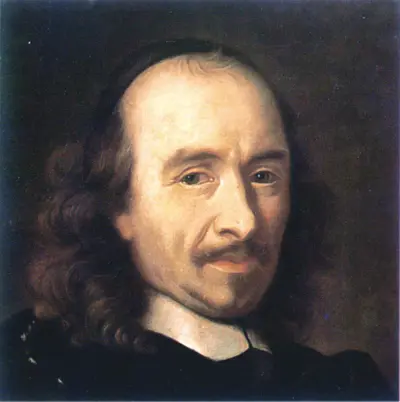
Corneille was born in Rouen, Normandy, France, to Marthe Le Pesant and Pierre Corneille, a distinguished lawyer. His younger brother, Thomas Corneille, also became a noted playwright. He was given a rigorous Jesuit education at the Collège de Bourbon (Lycée Pierre-Corneille since 1873) where acting on the stage was part of the training. At 18 he began to study law but his practical legal endeavours were largely unsuccessful. Corneille's father secured two magisterial posts for him with the Rouen department of Forests and Rivers. During his time with the department, he wrote his first play. It is unknown exactly when he wrote it, but the play, the comedy Mélite, surfaced when Corneille brought it to a group of traveling actors in 1629. The actors approved of the work and made it part of their repertoire. The play was a success in Paris and Corneille began writing plays on a regular basis. He moved to Paris in the same year and soon became one of the leading playwrights of the French stage. His early comedies, starting with Mélite, depart from the French farce tradition by reflecting the elevated language and manners of fashionable Parisian society. Corneille describes his variety of comedy as "une peinture de la conversation des honnêtes gens" ("a painting of the conversation of the gentry"). His first true tragedy is Médée, produced in 1635.
