Adlai Stevenson I Quotes
I say frankly, as a citizen more than a candidate, that I recoil at the prospect of Mr. Nixon as custodian of this nation’s future, as guardian of the hydrogen bomb, as representative of America in the world, as commander in chief of the United States armed forces.
There was much distrust of Nixon even within the Republican party. The Democrats used that but the overwhelming popularity of Eisenhower carried the election for the Republicans.
Adlai Stevenson, 1900-1965, U. S. Congressman (Democrat, IL), Governor of Illinois, Democratic candidate for President, U. S. Ambassador to the United Nations, Statement, Election Eve, 1956
Sourced by: Eigen's Political and Historical Quotations


Abraham Lincoln's election came at a time when the preservation of the United States as one nation was in question. Many, including the incumbent President, had little confidence in Lincoln's capacity to govern:


I can go into my office and pick up the telephone, and in 23 minutes 70 million people will be dead.
He had been asked if the impeachment proceedings weakened him as the President.


When Nixon was running for President in the 1968 Presidential campaign, he learned from Henry Kissinger that the Johnson administration had made an agreement with the Russians and North Vietnamese that America would stop the bombing of North Vietnam if there would be Peace Talks to end the Vietnam War. Nixon feard that although the polls showed him ahead of Vice President Humphrey, the announcement of ongoing peace talks would bring many of the anti-war Democrats who were not supporting Humphrey because of the Vietnam War out to vote for Humphrey to support the Peace Talks. Nixon decided to sabatouge the Peace Talks by persuading Vietnamese President Nguyen Van Thieu not to come to the peace table so there coulod be no talks. He accomplished this by having Anna Chennault, an extreme right-wing fund raiser who was the widow of General Chennault of Flying Tiger fame and who had connections with all the right wing politicans in Asia, get word to President Thieu that President Johnson would sell him out in the peace upcomming peace talks, and that if he would boycott the peace talks till after the American Presidential election, Nixon as the New Presidnt would be sure that Thieu would remain in control of South Vietnam or there would be no peace and America would continue the war until the North Vienamese would agree to a peace that kept Thieu in power. Earlier, Nixon had appointed Anna Chennault as the Offical Spokesperson of the Campaign on Asia. What Nixon did was a felony--private citizens are not alowed to intere with government negotiatons or descussions with foreign governments, under the Logan Act Many think that the action was legally Treason. Hoever, Nguyen VanThieu did boycott the peace talks despite all the entreaties of President Johnson and his administration. There were no peace talks and the public never even knew that there had been this attempt. The anti-Vietnam War voters mostly did not vote and Nixon won a close race. Shortly after the election, before Nixon could be sworn in, via the FBI Johnson learned of Chennault's activities but thee was no evidence to tie Nixon to the South Vietnam refusal to come to the peace table. It neever became a public issue although several leading politicians had learned what had really occured--see Quotation 664238. However, 0ver 40 years later, when Nixon's Chief of Staff's notes were finally made public, the smoking gun was dislosed and Farrell wrote this in his 2017 Biography of Richard Nixon. See Related Quotes for quotations from H. R. Haldman's hadnwritten notes of his phone call with Nixon, and other evidence that had also been uncovered.


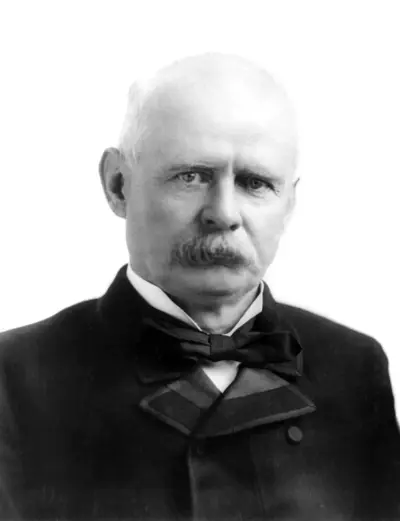
Adlai Ewing Stevenson served as the 23rd vice president of the United States from 1893 to 1897. Previously, he served as a representative from Illinois in the late 1870s and early 1880s. After his subsequent appointment as assistant postmaster general of the United States during Grover Cleveland's first administration (1885–1889), he fired many Republican postal workers and replaced them with Southern Democrats. This earned him the enmity of the Republican-controlled Congress, but made him a favorite as Grover Cleveland's running mate in 1892, and he duly became vice president of the United States.
