Frederick Douglass Quotes
I recognize the Republican party as the sheet anchor of the colored man's political hopes and the ark of his safety.
Douglass, Frederick. Life and Times of Frederick Douglass. Park Publishing Co., 1881.


The Nixon "Southern Strategy" was that if the Republican Party made extensive efforts to appeal to minorities, given the previous decades of support of white supremacy, they would only be successful with a few, whereas if the Party went in the other direction and supported the Whites fighting against the Democratic initiated, racist hated, Civil Rights Act, they would get almost all the racist Southern Democrats, which were most white males and many white females. This racist policy enabled the Republicans to gain control of the Federal Government more often than not whereas before, it was very unusual.

The large majority of the American people opposed legal segregation and for years, the segregationist, racist, Southern white minority were able to prevent any Civil Rights legislation by using the filibuster until President Lyndon Johnson, formerly a Southern Senator who understood the legislative process better than any other American president used his great skill to pass Civil Rights legislation instead of opposing it which he had done for years as a Texas Senator and the Majority Leader of the Senate.


The President wanted Anderson to relay his message to other Republicans which he did. At that time the Southern racists were almost all members of the Southern bloc of the Democratic Party. Most Republicans were then advocates of non discrimination. By 2010 virtually all the racists, nativists, neo Nazis, anti Catholics, and anti Semites had gravitated to the Republican party if they were still active in politics. Reasonable Republicans were embarrassed as reasonable Democrats had been before the shift which resulted from passing the Civil Rights Act of 1964.

In the middle of WWII where Black soldiers were fighting and dying on the war front, there were fears of racists that the Blacks would return and demand full equality and an end to segregation. There were threats in the South of armed attacks against any returning serviceman who would push for desegregation.


This was the last public speech that Lincoln made before he was shot.

Nixon, in his second attempt to win the Presidency was told by a small group of Southern Republican politicians that his support was wavering in the South. They had already left the Democratic Party in reaction to the Passage of the 1964 Civil Rights Act. They were concerned because in order to try and capture some of the more liberal anti-war Democrats, Nixon had been making speeches advocating the vigerous enforcement of of civil rights and improving the lot of the Negro. But Nixon could not afford to lose his political base inb the south. Hence the promise which did not keep very long after he was elected President. Nixon was not a strong civil rights President, but he was totally without principles and had no political idiology he would sacrifice any of his political capital for. So once he was elected, he didn't want to offend the centerists whose support he needed for his legislatrive program so he did pay lip service to the prinicples of equality when he himself was anti-Black, andti-Semitic and prejudiced in many areas including against intelelctuals.

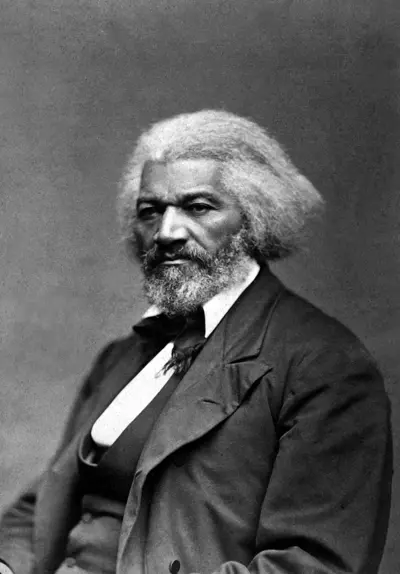
Frederick Douglass was an American social reformer, abolitionist, orator, writer, and statesman. After escaping from slavery in Maryland, he became a national leader of the abolitionist movement in Massachusetts and New York, becoming famous for his oratory and incisive antislavery writings. Accordingly, he was described by abolitionists in his time as a living counterexample to slaveholders' arguments that slaves lacked the intellectual capacity to function as independent American citizens. Likewise, Northerners at the time found it hard to believe that such a great orator had once been a slave.
