James F. Byrnes Quotes
The Negro has not only come into the Democratic Party, but the Negro has come into control of the Democratic Party.
James F. Byrnes, 1879-1972, U. S. Congressman & U. S. Senator (Democrat, SC), U. S. Supreme Court Justice, U.S. Secretary of State, Governor of South Carolina, Senate Debate, 1938
Sourced by: Eigen's Political and Historical Quotations

This was art of the Nixon "Southern Strategy" to alienate the white supremacists and racists from the Democratic Party with Civil Rights legislation and rhetoric, and get most of them to become Republicans. But as Phillips observed, when Negroes began voting in significant numbers in the South the party switching really accelerated.

The Nixon "Southern Strategy" was that if the Republican Party made extensive efforts to appeal to minorities, given the previous decades of support of white supremacy, they would only be successful with a few, whereas if the Party went in the other direction and supported the Whites fighting against the Democratic initiated, racist hated, Civil Rights Act, they would get almost all the racist Southern Democrats, which were most white males and many white females. This racist policy enabled the Republicans to gain control of the Federal Government more often than not whereas before, it was very unusual.

On why he joined the Republican party:

In the original Constitution the apportionment of members of the House of Representatives was based on the white population plus After his Presidency, Adams served in the House of Representatives for many years and was thus active in politics.

Illinois Democrats had made a few visible appointments of Blacks to patronage positions during the campaign, but who were generally opposed to Civil Rights Legislation or any economic reforms that would help the majority of Blacks—some would argue that this was the obverse of the party situation entering the third millennium.


Comintern was generally supportive of Black enfranchisement; but they were unrealistic, for they viewed Blacks as an oppressed “nation” within the United States. Blacks, however, weren’t looking for a distinct nationhood, but just to be fully accepted into the already existing nation.

Black Newspaper in Indianapolis


Pickering referred to Jefferson as the “Negro President” because he believed his presidential power rested on the shoulders of slavery.


At the time the Democratic Politicians of the South went to extremes from refusing to register Black voters to countenancing assault, torture and even murder of Blacks who organized voter registration. When the racists switched to the Republican party, is was Republican politicians who tried to make voter registration and voting more difficult for minorities, but the means and degree of these efforts were very mild compared to what is was when Rustin uttered this quotation.

The Racism in Alabama was so extensive that establishing white supremacy was the main purpose of creating a state constitution, and the delegates were not at all embarrassed by this blatancy. He had little reticence to admit that maintaining white supremacy had been previously done illegally by force and fraud.
When the first Southern States seceded, each appointed a whose job it was to persuade the other Southern States to also secede. In this case Hale was marketing secession to Kentucky which with Maryland were the only two Southern States to reject what they regarded as treason and rebellion. The importance of the quotation however is in his argument which was all based on enmity to racial equality and abolition. Later Southern apologists would argue that the Civil War was fought, not about slavery and racism butt about different philosophies of government. See {623715} .

Note the early use of the term “March on Washington.” See {625658}.
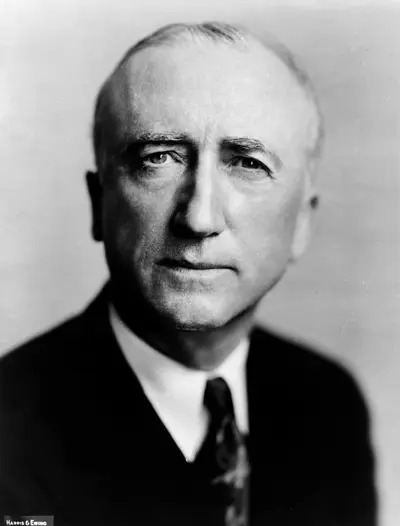
James Francis Byrnes was an American judge and politician from the state of South Carolina. A member of the Democratic Party, Byrnes served in Congress, the executive branch, and on the United States Supreme Court. He was also the 104th governor of South Carolina, making him one of the very few politicians to have served in the highest levels of all three branches of the American federal government while also being active in state government.
