William Whipple Quotes
I hope in time N. H. as well as the other States will feel the importance of Sovereignty.
Whipple, William. Letters of Delegates to Congress, 1774-1789. Edited by Paul H. Smith, Library of Congress, 1976-2000.

Greene had a deep distrust of Congress from his wartime experiences regarding support of the troops. See {621971}.

At the start of his first term Lincoln was supportive of States rights.


The custom during the civil war was that dead soldiers would be buried in groups by the state they came from. The chaplain, after a particularly bloody battle, has asked if he should separate the bodies by state.

At the time his Vice President, John C. Calhoun, was expounding a theory of “nullification” by which the states could supersede and nullify federal law in their states. When Jackson finished his toast, it was Calhoun’s turn (See {635896}.) His toast supported the States’ Rights position over the federal government. In those days Presidents and Vice President’s were often political enemies or of opposite parties. The President’s advisors thought that his toast might be misinterpreted. So when they gave the toast to the press as “The Federal Union: It must be preserved.” That was the form in which the press reported the President’s toast and for many years that was the version most quoted even though it was never delivered that way. However Jackson was responsible for both versions.


Czechoslovakia resembles America because

There had been terrible religious wars between Catholics and Protestants in English history. The Protestants finally won and the Anglican Church of England became the “official” state church, but as England became a Democracy the power of the prelates and the church receded. However, there were fears of Catholic politicians in England that they were “controlled by the Pope” and if Catholics were too heavily part of the political system, the Pope might control and dominate English policy. Inge, one of the highest ranking Anglican clerics, allayed this fear, not by denying that the Popes and the Vatican might be interested in gaining more influence in England, but by appealing to the independence of the average Englishman and diminishing the spectre of the Pope by referring to him as an “Italian Priest.” As Inge and other high ranking Anglicans were in the English power system only English Priests. Inge at the time saw the Roman Catholic Church as a narrow, intolerant, monolithic anti modern institution. See {615671}. He argued that fear was inappropriate not because of the nature pf the Roman Church, but because of the characteristics of Englishmen, American Protestants had similar fears and Al Smith was defeated as President mainly because he was Catholic. For all but the worst religious bigots, this fear ended in America with the election of JFK.


Madison was defending the proposed Constitution against a vocal minority who complained that the Federal government would be dominant over the States and the large cities. Madison pointed out that it was people who fought the Revolution and sacrificed for it, not States or political entities. The Constitution was to be for the people, not the existing governmental entities. It was for Americans and not for local politicians. The “State’s Rights faction lost the debate, and the Constitution and Bill of Rights was adopted. That is why this quotation is so important. The slavery enthusiasts, racists, and others have constantly tried to diminish the Federal supremacy even to this day.
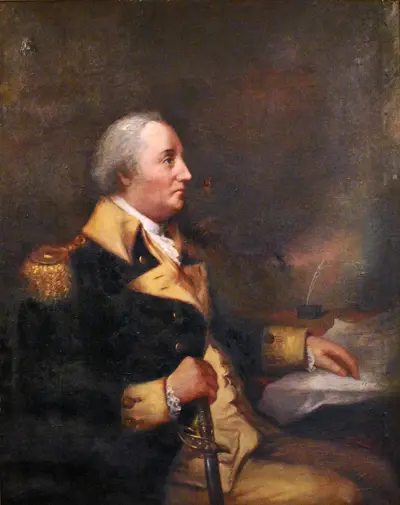
William Whipple Jr. was a signatory of the United States Declaration of Independence as a representative of New Hampshire and a member of the Continental Congress from 1776 through 1779. He worked as both a ship's captain and a merchant, and he studied in college to become a judge. He died of heart complications in 1785, aged 55.
