Jack Johnson Quotes
I found no better way of dealing with the race problem as to interact with all other people as if discrimination did not exist.
Arthur John (Jack) Johnson, 1878-1946, Professional Boxer (1st Black Heavyweight Boxing Champion of the World), Quoted on PBS Unforgivable Blackness, May 12, 2005
Sourced by: Eigen's Political and Historical Quotations


Having endured centuries of near slavery and discrimination, 70,000 Irish people signed this petition urging American-Irish immigrants to understand the similar plight of African-Americans and to join together with abolitionists. Irish immigrants were nevertheless reluctant to join the abolition movement because the movement was often tied to anti-Catholicism and many feared that the emancipation of Blacks would increase competition for the low-paying jobs immigrants held.

This was actually a very courageous statement for an American politician running for national office. As a result of the pressure of this statement President Franklin Roosevelt allowed Black enlistment in the Army Air Forces.

This quotation is one of the inscriptions at the Robert F. Kennedy gravesite in Arlington National Cemetery.


This was a very courageous speech for the President to give. Senator Hubert Humphrey had proposed civil rights legislation. At the time most of the racial conservative members of Congress were Democrats and not Republicans as they would become after Civil Rights legislation actually passed in 1964. There was little possibility that the civil rights law would pass as the Southern Democrats could filibuster it in the Senate. None the less Truman supported the legislation and the principle of equal rights despite the fact that he was a Southerner and he knew he would lose the support of the conservative wing of his party.

The great contralto singer, Marian Anderson, an African American, had been refused by the Daughters of the American Revolution the use of Constitution Hall as a venue for her concert based on their White Performers Only policy. First Lady, Eleanor Roosevelt, resigned in protest from the DAR and she and the President asked Secretary Ickes to arrange a public concert at the Lincoln Memorial and he did. There was no Civil Rights Act at the time.

Clinton was reacting to questioning about gays in the military.


At the time, the Southern segregationists were all Democrats and they blocked any Democratic attempt to pass any Civil Rights legislation. When he could not get a Civil Rights commitment from his own party, Powell turned to the Republicans and the President wrote this letter. In return, in November, Powell endorsed and supported Eisenhower instead of Stevenson, his own party’s nominee. Eisenhower could not get any legislation on Civil Rights as the Southern Democrats would always block it. When President Lyndon Johnson finally forced the 1963 Civil Rights Act through the Congress, the racist Southern Democrats cut a deal with Goldwater and the conservative Republicans, and switched parties. Since then the Civil Rights stance of the two parties reversed. The Democrats were thereafter pro Civil Rights and the Republicans, the party of Lincoln and Reconstruction, thereafter reversed their Civil Rights position and opposed progress in this area.


He was not too far off on religious discrimination, but quite overoptimistic on racial discrimination.

This was an indirect slap at the Boy Scouts of America. At the time, racial segregation was legal and overtly practiced in the Southern States. The Boy Scouts could have been a great force for desegregation, but the leadership did not have that as a value for the organization. The Girl Scout leadership however saw the contradiction between segregation and the supposed values of America and their own organization. They were not only very active but very successful at desegregation at a time when they were atypical, and for most Americans, segregation was the norm.


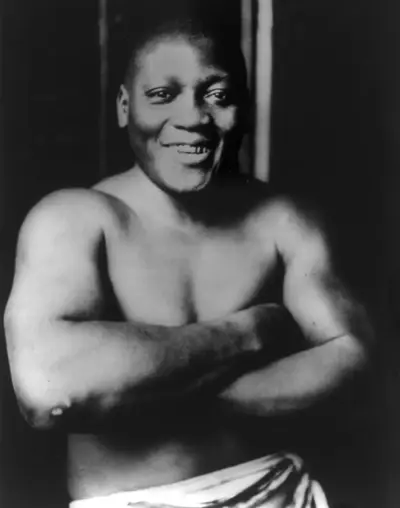
John Arthur Johnson, nicknamed the "Galveston Giant", was an American boxer who, at the height of the Jim Crow era, became the first African American world heavyweight boxing champion (1908–1915). Widely regarded as one of the most influential boxers of all time, one of the period's most dominant champions, and as a boxing legend, his 1910 fight against James J. Jeffries was dubbed the "fight of the century". According to filmmaker Ken Burns, "for more than thirteen years, Jack Johnson was the most famous and the most notorious African-American on Earth". Transcending boxing, he became part of the culture and history of racism in the United States.
