Lyndon B. Johnson Quotes
Justice requires us to remember that when any citizen denies his fellow, saying, "His color is not mine," or "His beliefs are strange and different," in that moment he betrays America
Lyndon Baines Johnson, 1908-1973, 36th President of the United States (Democrat, TX), Inaugural Address, January 20, 1965
Sourced by: Eigen's Political and Historical Quotations


This was actually a very courageous statement for an American politician running for national office. As a result of the pressure of this statement President Franklin Roosevelt allowed Black enlistment in the Army Air Forces.


He was not too far off on religious discrimination, but quite overoptimistic on racial discrimination.


This is a terrific statement of Americanism at any time, but it is particularly notable in 1888. At that time anti-Catholicism and anti-Semitism were both heavy throughout the country. Jim Crowe and racism was rampant, Orientals were heavily discriminated against especially on the West Coast. Irish and Italians were not wanted in most of America except as manual laborers.

Clinton was reacting to questioning about gays in the military.

An avowed Klansman and white supremacist, Duke was elected to the Louisiana House in 1989 as a Republican, to the chagrin of leading national, state, and local Republicans who disavowed him and refused to support his candidacy. Upon taking the oath of office Duke said:

Having endured centuries of near slavery and discrimination, 70,000 Irish people signed this petition urging American-Irish immigrants to understand the similar plight of African-Americans and to join together with abolitionists. Irish immigrants were nevertheless reluctant to join the abolition movement because the movement was often tied to anti-Catholicism and many feared that the emancipation of Blacks would increase competition for the low-paying jobs immigrants held.


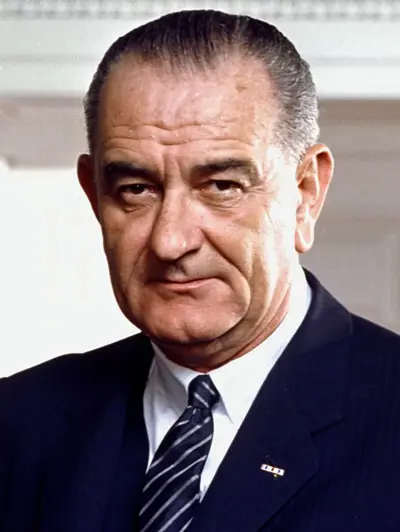
Lyndon Baines Johnson, often referred to by his initials LBJ, was the 36th president of the United States, in office from 1963 to 1969. He served as the 37th vice president from 1961 to 1963 and assumed the presidency following the assassination of President John F. Kennedy. A Democrat from Texas, Johnson was also a United States representative and later majority leader in the United States Senate. Johnson is one of only four people to have served, at various times, in all four federal elected positions.
