Dean Acheson Quotes
I doubt very much if a man whose main literary interests were in works by Mr. Zane Grey, admirable as they may be, is particularly equipped to be the chief executive of this country, particularly where Indian Affairs are concerned.
Dean Acheson, 1893-1971, U.S. Secretary of State (Democrat), View of Dwight D. Eisenhower
Sourced by: Eigen's Political and Historical Quotations


MacArthur was astounded that the country turned to Eisenhower rather than him. He actually did not think much of Eisenhower. Eisenhower, was very critical of MacArthur. See

Even the President was not spared during the McCarthy era. The red scare was so pervasive, that a lunatic fringe ultra right wing organization could call the President a “communist dupe” and be taken seriously be much of the media who were themselves intimidated and might be accused of being communists at any moment. It was a very low point in America’s history.

Alsop, a political hawk was convinced, as many other right wingers were at the time that the Russians had forged ahead of us in offensive missiles. When he asked President Eisenhower, the President never denied it, but never went to Congress to ask for more money to close the “missile gap”. Alsop made this shocking accusation which offended many Americans, but pleased the ultra-hawks and anti-communists. Most of the nation however then believed that there was a missile gap, with varying explanations of Eisenhower’s silence on the matter. Two years later John F. Kennedy, used the “missile gap” when running in 1960 against Nixon by attacking Nixon and Eisenhower for allowing us to fall behind the Russians at have a missile gap. When Kennedy became President, he was very surprised that there was no missile gap favoring the Russians—it was favoring the United States. Eisenhower did not want the Russians to know that he knew exactly what they were producing and deploying in missiles through great espionage sources. By not saying anything in the face of the accusations, the Russians assumed that the Americans really thought that they had more capacity than they did. And Eisenhower wanted that so that they would be secure that the United States had no real knowledge of their missile capacity. If Eisenhower had actually told the nation that the Russians were really behind us, the Russians would suspect a security leak and our sources could be compromised.


While the Southerners, and Northern Democrats accused Lincoln of precipitous, hasty and radical actions, radicals of his own party were not happy with him as he didn't move fast and firmly enough.


Armstrong rarely commented on politics (see {615854}), but the Governor defying the Supreme Court and not letting his people even go to school with other students was too much for him. He not only made the statement, but he approved it for publication. This shocked many who knew him as an apolitical person. He was particularly distressed with President Eisenhower who although he had warned Faubus that he would enforce the court order and then used federal troops to do so, Eisenhower was a man of action and not rhetoric and his lack of firm public statements overlooked an opportunity to use the Presidential “bully pulpit” and exercise his moral leadership and authority. Many then, and even 50 years later, were not sure where he stood on the issue of school desegregation.

Dewey had been the Republican Presidential Candidate in 1948. Although he and the Republicans were the overwhelming favorites, Dewey lost to Harry S Truman. In 1952, Dewey was a major supporter of Robert Taft for the Presidency. But other Republicans including Dirksen wanted Dwight D. Eisenhower as the candidate. Dewey had given a rousing speech telling the Party to nominate Taft. Dirksen then responded. Such a public rebuke of a former standard bearer was considered very insulting. However, Dirksen was saying what most Republicans believed. Despite an intense effort by Taft and the very conservative wing of the Party, Eisenhower was selected as the nominee and he won the Presidency.

Welch was a conspiracy theorist paranoid and gave the legitimate conservatives of the time a bad name. The quotation was in the first version of the book, and then it was removed.

See {632333} for the offensive McCarthy attack on Zwicker.
That is one view—the one tried the most frequently by Presidents who by their own estimates didn’t get a responsive civil service working to his priorities. Presidents like Teddy Roosevelt, Franklin Roosevelt, and Dwight Eisenhower and Lyndon Johnson had great cooperation from their civil servants; they instead appointed very competent people with strong senses of fairness and leading personnel. Ronald Regan tried both techniques. He used Wilson’s technique in his Education and Justice Department where there was slow-rolling and dissonance when his appointees tended to be ideologues with little or no outstanding professional competence in the fields they supervised. However, his military and State Department bureaucracies was very responsive to his appointees who were excellent leaders.

When he became president himself, he not only served 10 years but changed the constitution so that he could serve forever and was still President over 20 years later. See {620732} for another similar statement.

The Vice President was on David Letterman's show when the host told an undignified joke about President William Clinton.

In a large, diverse nation like the United States even then, there was a wide spectrum of opinion and political ideology. It is true that almost all of Roosevelt’s initiatives were not original with him, but he was incredibly effective at bringing those ideas to the large bulk of people who had had no serious view on the subject before. He also was able to change many contrary opinions. What was most remarkable about Roosevelt was that the issues that he did advocate were very unpopular and even anathema to the establishment—the “ruling class” of the day even though most were in his own political party.


Although the Jacksonian Democrats were the political successors to the Jeffersonian Democratic Republicans, Jefferson found Jackson wanting as a potential president. Although Jefferson had made this statement during the 1824 Election, it did not become public until the Election of 1828 — Jackson’s second term. At that time Edward Coles, Formerly James Madison’s Secretary, disclosed the quotation.

Early in the Donald Trump Presidency, some of his first decisions, including his Anti-Muslim ban on immigration and vistitation from 7 Islamic nations, were very distrubing to amy politicians experienced in national security and defense. 100 leaders from past adminsitrations, Democratic and Republicans, signed a petition warning that the travek ban endangered our national security. Then 1000 U. S. State Department Diplomats signed a letter advising the President to recind the order for similar reasons. Malinowski was asked if this kind of opposition to a new presidents actions was unusual. This quotation was his reply. Not the use of sarcasim. He states what happened in very stark terms and then says that it is not unusual and there is notjing to worry about, when it was withotu precedent ever and very worrisome to him and others. Quotations using sarcasim are very problimatical becasue just a literal reading, would lead us to believe he was not concened with sich a common occurance.


This is a woderful example of the brilliant use of language. In response to a typical question literati are asked about reading recomendations for Presidents, he makes a seeiming innocuous recomendation that is withering in his criticism of President Donald Trumps dislike of reading anything extensive and detailed and his penchant for tweeting. It is insulting but very subtly so,

Northam, then the Virginia Lieutenant Governor, was campaigning to be the Virginia Governor. President Donald Tump had been in office less than 4 months, but his approval rating was the lowest in the early stages of a Presidential term of any President since such a measue had been made. Most of the hostility toward Trump was based on his personal characteristics, his prevaricationsm, and inconsistency. However, no politican in modern history had run for a high State position by attacking a President with such strong terms. However, many psychologists and psychiatrists also agreed with Northam who was a Physician as well as a politician.
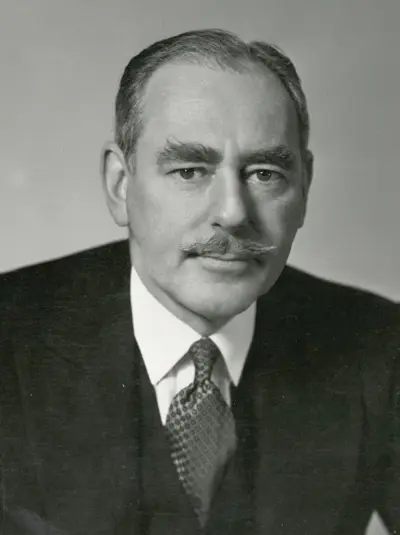
Dean Gooderham Acheson was an American statesman and lawyer. As United States Secretary of State in the administration of President Harry S. Truman from 1949 to 1953, he played a central role in defining American foreign policy during the Cold War. Acheson helped design the Marshall Plan and was a key player in the development of the Truman Doctrine and creation of the North Atlantic Treaty Organization.
