Bob Hope Quotes
I don't know what people have against Jimmy Carter. He's done nothing.
Bob Hope, 1903-2003, Actor & Comedian, Campaign speech for Ronald Reagan, November 2, 1980
Sourced by: Eigen's Political and Historical Quotations


Calling for the Vice President's removal from the 1992 Republican ticket:


In early 1933 President Hoover was a lame duck, but the country was in the midst of a banking panic in the Great Depression. Hoover tried to get President-elect Roosevelt to join him in some joint action, but Roosevelt didn't want to commit to anything in advance and preferred not to associate his administration with the banking debacle of the Hoover administration. He felt that the public was so soured on Hoover’s incompetence and lack of apparent empathy, that anything he did with Hoover would be perceived fas bad and doomed to failure. What Roosevelt wanted to do is diminish fear and despair and have new hope. However, Hoover was erroneously told by aids that Tugwell, a Roosevelt assistant, had suggested that Roosevelt should let the situation deteriorate, and then there would be more to blame on the Republicans when Roosevelt took office. Tugwell was as far from being a partisan politician as one could get. He was an academic with a PhD in agricultural economics. He had never been involved in politics before. Surprisingly, Hoover believed the story about Tugwell, but by then, the was a very frustrated man who felt that he had almost no good options.

Harriman was sent to Tokyo to meet with the general.


Asserting that her campaign was not dealing in negative campaigning:

First Lady Lou Henry Hoover, 1874-1944, invited Jessie DePriest the Black wife of a Congressman to tea at the White House. No Black woman had ever been there socially before. This was a typical Southern reaction. The Texas State legislature actually passed a resolution chastising the First Lady—the only such action in American history.


Mohamed Anwar El-Sedat. While the number he gave is an underestimate, his 5000 number did represent the number of militants who opposed the treaty.


In the latter part of the 20th century and the beginning of the 21st, one of the tactics of conservatives was to accuse liberal candidates and office holders of being un-American, unpatriotic, and disloyal to the country. The tactic goes back to the beginning of the nation when Jefferson and the Democratic Republicans claimed the Federalists were un-American--monarchists and Anglophiles. In the 1950’s, Senator Joseph McCarthy attacked President Truman, Secretary of State Acheson, Secretary of the Army Stevenson and many others for “un-Americanism.” Even wounded war hero, paraplegic, Senator Max Cleland was accused by Republicans a of being unpatriotic which led to his defeat at the polls. So accusing the President of being un-American, was that unique an act even though it shocked most Americans.

Romney who was typically well spoken, very frequently in his campaign speeches and appearances, made statements that were clearly untrue, and even worse statements which reinforced the negative stereotype of a disconnected rich man. Hence the joke about the muzzle.

Romney had a reputation for changing his political position and trying to straddle positions. After losing this race, Romney improved as a candidate and did not try and straddle as much. He won the governorship in the next election.


Rejecting the political support of Joseph R. McCarthy and other radical conservatives:
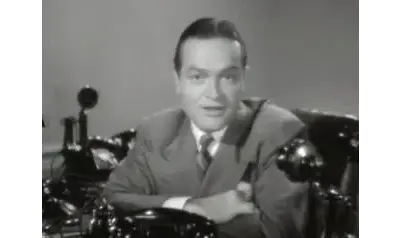
Leslie Townes "Bob" Hope KBE was a British-American stand-up comedian, vaudevillian, actor, singer, dancer, athlete and author. With a career that spanned nearly 80 years, Hope appeared in more than 70 short and feature films, with 54 feature films with Hope as star, including a series of seven "Road" musical comedy movies with Bing Crosby as Hope's top-billed partner.
