Herbert Hoover Quotes
I can say emphatically that he (FDR assistant Rexford Tugwell) breathes with infamous politics devoid of every atom of patriotism.
In early 1933 President Hoover was a lame duck, but the country was in the midst of a banking panic in the Great Depression. Hoover tried to get President-elect Roosevelt to join him in some joint action, but Roosevelt didn't want to commit to anything in advance and preferred not to associate his administration with the banking debacle of the Hoover administration. He felt that the public was so soured on Hoover’s incompetence and lack of apparent empathy, that anything he did with Hoover would be perceived fas bad and doomed to failure. What Roosevelt wanted to do is diminish fear and despair and have new hope. However, Hoover was erroneously told by aids that Tugwell, a Roosevelt assistant, had suggested that Roosevelt should let the situation deteriorate, and then there would be more to blame on the Republicans when Roosevelt took office. Tugwell was as far from being a partisan politician as one could get. He was an academic with a PhD in agricultural economics. He had never been involved in politics before. Surprisingly, Hoover believed the story about Tugwell, but by then, the was a very frustrated man who felt that he had almost no good options.
Herbert Hoover, 1874-1964, 31st President of the United States (Republican, IA), 1933
Sourced by: Eigen's Political and Historical Quotations


In the latter part of the 20th century and the beginning of the 21st, one of the tactics of conservatives was to accuse liberal candidates and office holders of being un-American, unpatriotic, and disloyal to the country. The tactic goes back to the beginning of the nation when Jefferson and the Democratic Republicans claimed the Federalists were un-American--monarchists and Anglophiles. In the 1950’s, Senator Joseph McCarthy attacked President Truman, Secretary of State Acheson, Secretary of the Army Stevenson and many others for “un-Americanism.” Even wounded war hero, paraplegic, Senator Max Cleland was accused by Republicans a of being unpatriotic which led to his defeat at the polls. So accusing the President of being un-American, was that unique an act even though it shocked most Americans.

It took until the Presidency of Theodore Roosevelt until monopolies were regulated. Like many of the rapacious businessmen of his era, bribery of public officials was so common that he had no problem admitting this to a reporter who was interviewing him. His father Cornelius, one of the great, creative industrialists of America, was not at all of the same mindset or the same corrupt character and saw corporations and the Railroads as having an important role in America with substantial obligations to the society which enabled the economic development and supported the railroads. He described his son as a “blockhead”. William goes down in American history as the arrogant industrialist and capitalist whose wealth was produced by his talent of being born to the right father who built the great empire. At that time the bribery of members of Congress was direct with cash going directly into their pockets, unlike modern times where it is indirect in the form of Campaign contributions.


Political Parties go through transformations. In the 1950s the Republican Party had a core that was viciously attacking opponents and calling them Communists and traitors. In the early 21st century, their concern for the National Interest again was dwarfed by the desire to win and hold power, only this time intentional gridlock was added to the slanders. The Democrats have gone through unpatriotic ethical lapses as well. Parties are dynamic and change.
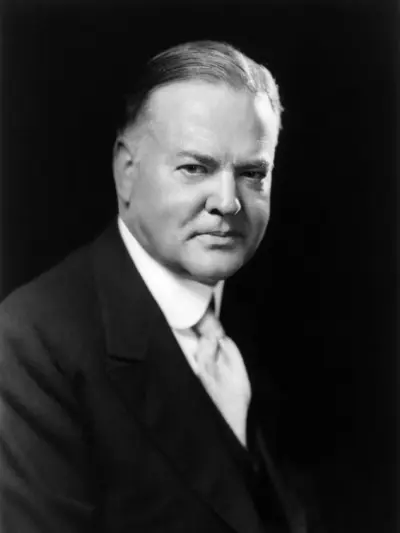
Herbert Clark Hoover was an American politician, businessman, and engineer, who served as the 31st president of the United States from 1929 to 1933. A member of the Republican Party, he held office during the onset of the Great Depression. Before serving as president, Hoover led the Commission for Relief in Belgium, served as the director of the U.S. Food Administration, and served as the third U.S. Secretary of Commerce.
