Margaret Chase Smith Quotes
I don't believe the American people will uphold any political party that puts political exploitation above national interest. Surely we Republicans aren't that desperate for victory.
Political Parties go through transformations. In the 1950s the Republican Party had a core that was viciously attacking opponents and calling them Communists and traitors. In the early 21st century, their concern for the National Interest again was dwarfed by the desire to win and hold power, only this time intentional gridlock was added to the slanders. The Democrats have gone through unpatriotic ethical lapses as well. Parties are dynamic and change.
Margaret Chase Smith, 1897-1995, U. S. Senator (Republican, Maine), Declaration of Conscience, 1950
Sourced by: Eigen's Political and Historical Quotations


Congress at that time had about a 12 percent public approval rating. Other emergency disaster appropriations had been made in previous years in days or weeks, but the aid for New Jersey, New York and Connecticut had been voted by the Democratic-controlled Senate but not in the Republican controlled House. The Republican House leadership had planned a vote after the Fiscal Cliff vote the previous evening before the end of the Congressional term. Then the speaker cancelled the vote infuriating Christie and many of the members of Congress. His reason was that there was opposition from the Tea Party Conservative wing of his own party who had just been badly beaten on the fiscal cliff legislation, and the Speaker was up for reelection by his own party caucus the following day. If the vote had proceeded, it would have passed with Democratic and some Republican support but with the opposition of the conservative wing some of whom noted that the states seeking the emergency aid had just recently voted for President Obama and they were opposed to more federal spending despite the fact that emergency aid had never before been subjected to such partisan criteria. After much pressure, the Speaker then committed to an up or down vote in the following Congress to the chagrin of some of the Tea Party members. Governor Christie, much admired for his commitment to his state and not politicking was his candid self but he did not even go as far as Republican Congressman Peter King {630995}.


The nation was facing the scourge of McCarthyism. Senator Smith was the most courageous member of the Senate in denouncing the lying demagogue of her own party who was so powerful at the time—Joseph R. McCarthy. At the same time, there were some communists trying to undermine the values or the nation as well as the fascists. Smith was one of the first to recognize the danger of both.

Roosevelt was running again for the presidency, however this time as a Third Party Candidate. He lost to Woodrow Wilson but outpolled the Republicans. This was the Third Party performance since Abraham Lincoln.


The Republicans had been badly beaten in the 2012 Presidential Election. Many attributed the loss to the dissatisfaction of the electorate with the Republican ideas which had become more and more conservative in recent decades. Others, like Rubio, wanted to maintain the existing ideas which were very different from the Republican ideas earlier when they won more elections.


The Republicans who won control of Congress in 2000 with a Republican President had campaigned on the principle of smaller government and no deficits. In the next 8 years they spent more than any Congress in history and twice as much as President Clinton had in the previous 8 years not counting military spending and entitlements which were much greater.
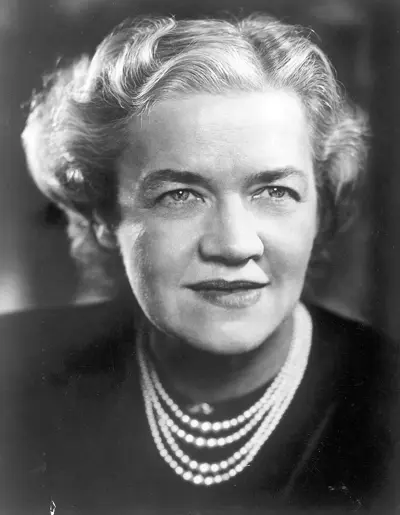
Margaret Madeline Chase Smith was an American politician. A member of the Republican Party, she served as a U.S Representative (1940–49) and a U.S. Senator (1949–73) from Maine. She was the first woman to serve in both houses of the United States Congress, and the first woman to represent Maine in either. A moderate Republican, she was among the first to criticize the tactics of Joseph McCarthy in her 1950 speech, "Declaration of Conscience". Smith was an unsuccessful candidate for the Republican nomination in the 1964 presidential election, but was the first woman to be placed in nomination for the presidency at a major party's convention.
