D'Arcy McGee Quotes
I do not believe that is our destiny to being engulfed into a Republican union (with the United States), renovated and inflamed with the wine of victory, of which he now drinks so freely...
D'Arcy McGee, 1825-1868, Irish National and member of Canadian Parliament (Liberal), Speech, Quebec City, 1862
Sourced by: Eigen's Political and Historical Quotations


He persuaded many other rulers to join the Indian Union when India became Independent.


See Carl Schurz {33636} for an 1872 version and G. K Chesterton for perspective {597471}.


Given the time, Mill’s view on the colonies were appreciated by few Englishmen, but turned out to be exactly predict the British reality a century later.


At the beginning of the Battle of Britain, it appeared that England would not be able to hold out against Germany. King was asked by Roosevelt to try and persuade British officials that if they sued for peace that they would not turn over the British fleet to the Germans but would convey it to Canada. Such an act would have produced serious retribution by the Germans.
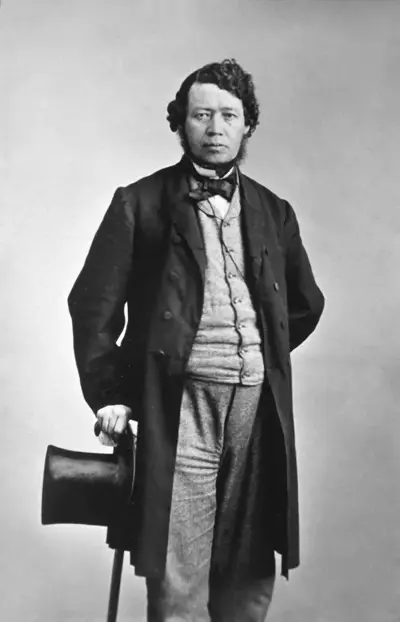
Thomas D'Arcy Etienne Grace Hughes McGee was an Irish-Canadian politician, Catholic spokesman, journalist, poet, and a Father of Canadian Confederation. The young McGee was a Catholic Irishman who opposed British rule of Ireland, and worked for a peasant revolution to overthrow British rule and secure Irish independence. He escaped arrest and fled to the United States in 1848, where he reversed his political beliefs. He became disgusted with American republicanism and democracy, and became intensely conservative in his politics and in his religious support for the Pope. He moved to Canada in 1857 and worked hard to convince the Irish Catholics to cooperate with the Protestant British (members of the church) in forming a Confederation that would make for a strong Canada in close alliance with Britain. His passion for Confederation garnered him the title: 'Canada's first nationalist'. He fought the Fenians in Canada, who were Irish Catholics that opposed the British and resembled his younger self politically. McGee succeeded in helping create the Canadian Confederation in 1867, but was thought to have been assassinated by Patrick J. Whelan in 1868.
