Wilfrid Laurier Quotes
Canada is free and freedom is its nationality.
Colombo, John Robert. Colombo's Canadian Quotations. Hurtig Publishers, 1974, p. 340.


In a House debate in 1923 on the Nordic or Latin discovery of America, Congressman Summers of Washington asked Italian-American Congressman La Guardia to yield to ask whether or not Christopher Columbus had come from "your country."


In 1837 and 1839 there were insurrections in Lower Canada against British rule. The British put down the rebellions and executed a few of the leaders.


Compare John C. Calhoun's Liberty Dearer Than Union.


At the partition if India into Hindu and Muslim States, what is now Bangladesh, was a part of Pakistan called “East Pakistan” by the Pakistani government. While India became a thriving democracy, Pakistan with its combination of military strongmen and Islamic Fundamentalists did not fare as well and became a very corrupt, undemocratic military nation. East Pakistan was not contiguous with the rest of Pakistan and was culturally quite different and less religiously fundamentalist. While all Pakistanis suffered from poor government, the East Pakistanis fared worse. Finally, they developed their own identity which was suppressed by the military dictators of Pakistan and the Banglas revolted and Bangladesh became and independent nation.


In most revolutionary settings leaders have to persuade people who have voted with no success to turn to the rifle. In Ireland at this point, almost all the nationalsits knew that the rifle would help them but they were not sure that a vote would have the effect of a bullet.
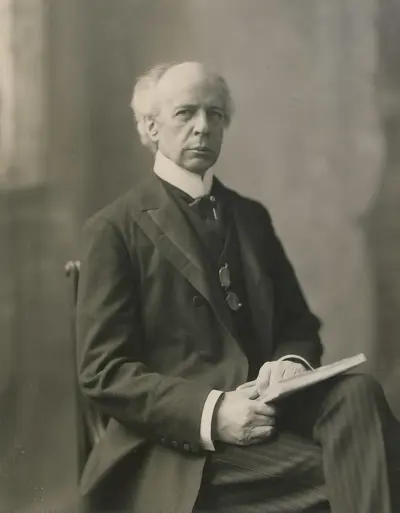
The second child of Carolus Laurier and Marcelle Martineau, Wilfrid Laurier was born in Saint-Lin, Canada East (modern day Saint-Lin-Laurentides, Quebec), on 20 November 1841. Laurier was among the seventh generation of his family in Canada. He was a sixth-generation Canadian. His ancestor François Cottineau, dit Champlaurier, came to Canada from Saint-Claud, France. He grew up in a family where politics was a staple of talk and debate. His father, an educated man having liberal ideas, enjoyed a certain degree of prestige about town. In addition to being a farmer and surveyor, he also occupied such sought-after positions as mayor, justice of the peace, militia lieutenant and school board member. At the age of 11, Wilfrid left home to study in New Glasgow, a neighbouring village largely inhabited by immigrants from Scotland. Over the next two years, he familiarized himself with the mentality, language and culture of British people. Laurier attended the Collège de L'Assomption and graduated in law from McGill University in 1864.
