Edward Grey Quotes
I could satisfy the French press any day, by saying that we entirely agreed with their view.
Edward Grey [Viscount Fallodon], 1862-1933, British Foreign Secretary (Liberal), Foreign Office memorandum to Sir A. Nicholson, October 13, 1908
Sourced by: Eigen's Political and Historical Quotations


Referring to the Peace between Japan and Russia which he had brokered and for which he had won the Nobel Peace Prize.


The queen was a lot more sophisticated about the newspapers than politicians in the 21st century.


In 1832 the President sent Edmund Roberts, a New Hampshire sea captain, to arrange commercial treaties with Asian countries such as Burma, Indo-China, Siam and Japan:


3rd Viscount Palmerston. Julius Jacob von Haynau, 1786–1853, was a vicious Austrian General who had committed many atrocities in Italy and Hungary which today would be considered War Crimes and Crimes Against Humanity. He even had women publicly flogged who were heard saying anything sympathetic about the freedom fighters who the General suppressed brutally. On a visit to London, he was attacked and beaten by draymen at the Barclay & Perkins brewery, which he was visiting. (When Giuseppe Garibaldi came to England in 1864, he insisted on visiting the brewery to thank "the men who flogged Haynau.") The Austrian government complained to Queen Victoria about his treatment and the quotation is from the Foreign Minister’s letter reporting the facts to the queen. A letter of apology was sent by Temple to Austria, but it was worded in such a way that it was clear that the English government felt that the beating should never have taken place but it was not morally unjustified. This even angered the Austrians more. Haynau was known and despised by military men the world over. See {630983} for an American use of Haynau’s name.


This is an example of the 3 leading democratic powers refusing to recognize the will of the people in other nations in determining their leadership choice. King Constantine I was a demagogue who maintained popularity with the Greeks by constant roiling and urging conflict with Muslim Turkey—the traditional enemy of the Christian Greeks. It was particularly hypocritical in many eyes since President Woodrow Wilson had established the principle of self-determination. However, Constantine I was a disaster for the Greek people. This is one of the earliest situations where American foreign policy support was in conflict between good sense and self-determination. The dilemma has faced America frequently since then and was especially acute in the 2012 “Arab Spring” Egyptian election of the Muslim brotherhood which turned out to be a disaster for Egypt but at an earlier time had won a national election.
It is not our business to collect trophies but to try … [to] bring back the world to peaceful habits
Many in England and the other allies wanted to punish France for their aggression under Napoleon by barring France from the Concert of Europe—an informal institution of the major powers of Europe. Castlereagh’s view prevailed and France was included.

They were both children of Queen Victoria of England.

The capital was then New York. Not unlike today word spread quickly, far and wide, of events and speeches of the politicians. Adams complained that he was being quoted out of context and accused of changing his ideology and becoming a monarchist. His desire for a strong executive together with his proposals to give the executive formal titles of respect, led many to that conclusion. He was opposed to any hereditary monarchy and thus thought the criticism unfair. He was turned out of office after one term. Jefferson replaced him.

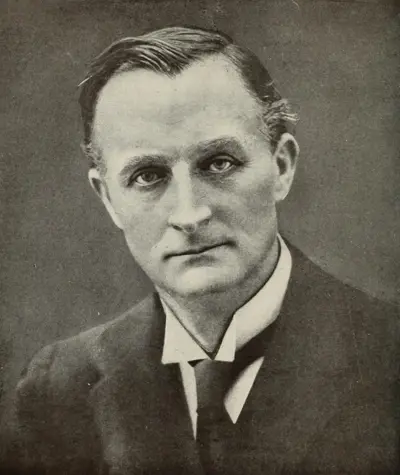
Edward Grey, 1st Viscount Grey of Fallodon, KG, PC, DL, FZS, better known as Sir Edward Grey, was a British Liberal statesman and the main force behind British foreign policy in the era of the First World War.
