Ramsay MacDonald Quotes
Let them [France and Germany] especially put their demands in such a way that Great Britain could say that she supported both sides.
James Ramsey MacDonald, 1866-1937, British Prime Minister (Labour), Quoted in Taylor, The Origins of the Second World War
Sourced by: Eigen's Political and Historical Quotations


Chamberlain’s policy was to appease Hitler and Germany to avoid war. Although he did not see Czechoslavkia as a critical British national interest and claimed he had secured peace {585941} , the reality was that he gave Germany room to start its aggression which would engulf all of Europe and much of the world. The British became the only bulwark against Hitler until the Russians stopped the Germans and America entered the war.

Senator Burton was using this quotation to support the Republican isolation policy that they were advocating at the time. This quotation has been cited by almost every American politician advocating isolationism. Generally it was the Republican party that has been the isolationist advocates in America. However, after the Second World War that began to change, and in the beginning of the 21st century, the George W. Bush Administration, without any declaration of war by Congress, attacked and invaded two different countries starting the Iraq and the Afghanistan Wars. Meanwhile, the Democrats, who had been advocating American activism in foreign affairs also flip flopped and opposed foreign military intervention as Democratic President Obama withdrew American troops from the two Bush wars. The Afghanistan War was the longest war in American history.

He was shot as a traitor when de Gaulle returned. See {587231} and {587230}.


Terrorism even then put strains on traditional diplomacy where bombers would take sanctuary or raise money in countries whose diplomatic policy was opposed to terrorism of all types. At this particular time, Irish terrorists would raise money in the United States to support the terrorists bombing English targets.

Dreadnoughts were huge battleships. Britain had the dominant navy of the world and controlled the seas. A European war would be a land war where a navy would be of little use. Hence, Britain would not want to get involved in such a war where she could not use her greatest military strength. He was wrong about this and so much else. Britain entered WWI when Germany invaded Belgium fulfilling her treaty obligations. The Germans intelligence operators and analysts were well aware of the treaty obligations, but had little understanding of English culture and tradition. The German aggression against a small power like Belgium was morally offensive to many in Great Britain, and Britain had a tradition of fighting for moral principles. The Germans would never militarily disadvantage themselves for the sake of a treaty obligation to a small nation, and they did not believe that the British would be so different and fulfill their treaty obligations even though their strongest military asset—their navy would not be very helpful.


The Spanish had been beaten and bloodied by England, but no one else until Napoleon would come along later. So it was easy for Spain to bully and dominate the non-English countries.


This was the first organization in Great Britain devoted to foreign affairs. In 1867 Linton emigrated to America where he devoted most of his time to the arts.

The Dutch Monarch William V, Prince of Orange, was in a very precarious position and might be deposed. Officially Harris and the British were supporting him and Harris was giving him money to firm up his regime, but their great fear was that the French would support and control the Patriot Revolutionary movement, then quite active or even intervene militarily to aid the Patriots.


The “proofs” were diplomatic assurances—treaties—that England would guarantee the territorial integrity of Belgium. The British made strong diplomatic efforts to persuade Germany not to occupy Belgium. The German’s none the less send armies in under the excuse that if they did not, the French would occupy the country and have a strategic advantage over them. Diplomacy could do no more good. England had to send troops or renege on its obligations. So England was in WWI.

A few months later, that is exactly what Germany did. She was hoping that England would not enter the war despite her treaty obligations, but she was willing to risk the possibility. The Czar had a strong espionage and intelligence service active in Germany, but, like so many other intelligence failures, the intelligence operatives and analysts had military and economic facts but had little understanding of the German culture which propelled Germany to what to most other cultures was “irrational policy making.” People and nations often engage in irrational activities, even against their own self-interest.

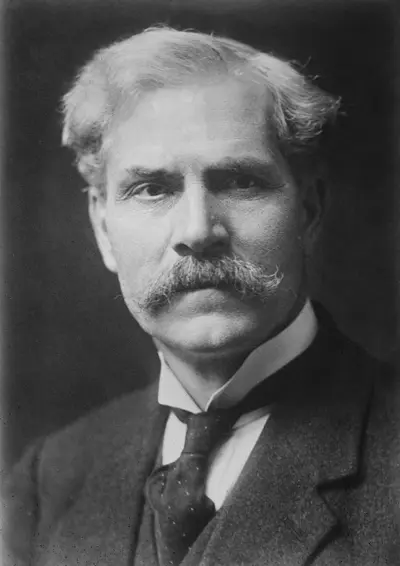
James Ramsay MacDonald FRS was the first Prime Minister of the United Kingdom who belonged to the Labour Party, leading minority Labour governments for nine months in 1924 and again between 1929–1931. From 1931 to 1935, he headed a National Government dominated by the Conservative Party and supported by only a few Labour members. MacDonald was expelled from the Labour Party as a result.
